Whereas, Almighty God hath created the mind free; that all attempts to influence it by temporal punishments or burthens, or by civil incapacitations tend only to beget habits of hypocrisy and meanness, and therefore are a departure from the plan of the holy author of our religion, who being Lord, both of body and mind yet chose not to propagate it by coercions on either, as was in his Almighty power to do; that the impious presumption of legislators and rulers, civil as well as ecclesiastical, who, being themselves but fallible and uninspired men have assumed dominion over the faith of others, setting up their own opinions and modes of thinking as the only true and infallible, and as such endeavouring to impose them on others, hath established and maintained false religions over the greatest part of the world and through all time; that to compel a man to furnish contributions of money for the propagation of opinions, which he disbelieves is sinful and tyrannical; that even the forcing him to support this or that teacher of his own religious persuasion is depriving him of the comfortable liberty of giving his contributions to the particular pastor, whose morals he would make his pattern, and whose powers he feels most persuasive to righteousness, and is withdrawing from the Ministry those temporary rewards, which, proceeding from an approbation of their personal conduct are an additional incitement to earnest and unremitting labours for the instruction of mankind; that our civil rights have no dependence on our religious opinions any more than our opinions in physics or geometry, that therefore the proscribing any citizen as unworthy the public confidence, by laying upon him an incapacity of being called to offices of trust and emolument, unless he profess or renounce this or that religious opinion, is depriving him injuriously of those privileges and advantages, to which, in common with his fellow citizens, he has a natural right, that it tends only to corrupt the principles of that very Religion it is meant to encourage, by bribing with a monopoly of worldly honours and emoluments those who will externally profess and conform to it; that though indeed, these are criminal who do not withstand such temptation, yet neither are those innocent who lay the bait in their way; that to suffer the civil magistrate to intrude his powers into the field of opinion and to restrain the profession or propagation of principles on supposition of their ill tendency is a dangerous fallacy which at once destroys all religious liberty because he being of course judge of that tendency will make his opinions the rule of judgment and approve or condemn the sentiments of others only as they shall square with or differ from his own; that it is time enough for the rightful purposes of civil government, for its officers to interfere when principles break out into overt acts against peace and good order;a nd finally, that Truth is great, and will prevail if left to herself, that she is the proper and sufficient antagonist to error, and has nothing to fear from the conflict, unless by human interposition disarmed of her natural weapons free argument and debate, errors ceasing to be dangerous when it is permitted freely to contradict them: Be it enacted by General Assembly that no man shall be compelled to frequent or support any religious worship, place, or ministry whatsoever, nor shall be enforced, restrained, molested, or burthened in his body or goods, nor shall otherwise suffer on account of his religious opinions or belief, but that all men shall be free to profess, and by argument to maintain, their opinions in matters of Religion, and that the same shall in no wise diminish, enlarge or affect their civil capacities. And though we well know that this Assembly elected by the people for the ordinary purposes of Legislation only, have no power to restrain the acts of succeeding Assemblies constituted with powers equal to our own, and that therefore to declare this act irrevocable would be of no effect in law; yet we are free to declare, and do declare that the rights hereby asserted, are of the natural rights of mankind, and that if any act shall be hereafter passed to repeal the present or to narrow its operation, such act will be an infringement of natural right.
Awhile back I finished up reading David Holmes's excellent book Faiths of the Founding Fathers (Oxford University Press, 2006). I appreciate his balance and attention to detail throughout. He characterizes the major founders as falling into three basic patterns: orthodox Christians, Christian deists, and non-Christian deists. While Holmes’s division of the Founders into those broad theological categories has considerable merit, I think that his use of the term “deist” is a less than helpful choice to describe the theology of most of the Founders who weren’t orthodox Christians.
Those folks, as Gregg Frazer has argued in his book The Religious Beliefs of America's Founders (University of Kansas, 2014), are best thought of as rationalistic theists. Most of them believed, for example, in a God who is active in human affairs, who is to be worshipped and prayed to, who will judge each and every person after death, etc. Even the least conventionally religious of the major founders, Benjamin Franklin and Thomas Jefferson, affirmed such a deity. This isn't a "watchmaker god" or some uninterested deity such as posited by the Roman writer Lucretius. While there is no question that many of the Founders eschewed orthodox trinitarianism, their conception of God remained theistic rather than deistic in its main points. To continue to refer to such Founders as deists risks confusion in the minds of modern folks, many if not most of whom do not realize that the theology of many of the Founders, even the least conventionally religious, was far more conservative than the term "deism" would indicate.
To expand on this point a bit, look at Benjamin Franklin. Franklin is generally acknowledged to one of the least religious of Founders. Early in his public career, he expressed in private correspondence to family members his own aversion to orthodoxy in religion and its professions of faith, particularly if such orthodoxy detracted from orthopraxy. As he wrote in a letter dated April 13, 1738:
I think vital Religion has always suffer'd, when Orthodoxy is more regarded than Virtue. And the Scripture assures me, that at the last Day, we shall not be examined [on] what we thought, but what we did; and our Recommendation will not be that we said Lord, Lord, but that we did good to our Fellow Creatures. See Matth. 26.
Franklin doesn't evidence a hostility for orthodoxy per se, simply orthodoxy that detracts from the cultivation of right conduct. Works were at the center of true religion for Franklin -- not to exclusion of belief in God, but as the foundation for how to determine if that belief was authentic. And he cited to the Christian New Testament in support of his approach.
This approach to belief and works appears in Franklin's most well-developed articulation of his religious convictions, found in his Autobiography, an articulation that he referred to as "an intended Creed, continuing as I thought the Essentials of every known Religion, and being free of every thing that might shock the Professors of any Religion." Franklin then set forth this "Creed":
That there is one God who made all things.That he governs the World by his Providence.That he ought to be worshipped by Adoration, Prayer and Thanksgiving.But that the most acceptable Service of God is doing good to Man.That the Soul is immortal.And that God will certainly reward Virtue and punish Vice either here or hereafter.
Franklin's views on religious belief & the necessity of works are consistent over time. Far from evidencing a hostility or apathy towards religious life, his views manifest a concern that belief evidence itself in the life of the individual, and that the virtues & vices of the individual are the basis for God's provision of rewards & punishments both in this life & the life to come.
While Franklin's creed is not expressly Christian (and was not intended to be), it certainly is not incompatible with orthodox forms of Christianity. More to the point, his statement of belief should put to rest any talk of him not affirming a theistic belief system. Franklin's God is no absentee landlord, but is an active presence in the world, who not only creates but "governs the World" via divine Providence. This God is worthy of worship -- including prayer and thanksgiving, indicating that Franklin believed that God acted in the lives of individual people, hence the benefit of asking God for help (through prayer) & thanking Him for His blessings.
Most touchingly, Franklin insists on the importance of good works in human life. The best way to serve this God is through good works that serve our fellow human beings, and that the judgment of each person's immortal soul will be based on what he or she has done in this life.
While not a churchgoer like George Washington, or a Hebrew scholar like James Madison, Franklin -- who attended no church regularly nor could read the biblical languages -- left a far clearer statement of faith than virtually any of the other Founders, Jefferson included. And it was a statement of faith that affirmed an active, providential Creator, a deity who would sit in judgment upon all human beings, rewarding and punishing them according to the deeds they did in this life. Whatever Franklin’s faith may have been, it wasn’t a faith in a watchmaker or absentee God.
Look also at Thomas Jefferson's religious views as expressed in his Gospel harmony available widely online and in an edition published by Beacon Press in 1989 as The Jefferson Bible: The Life and Morals of Jesus of Nazareth. Two key points become clear upon reading Jefferson's version of the story of Jesus. First, while Jefferson removed the miraculous components from the early ministry of Jesus (no virgin birth, no resurrection, no signs and wonders), he kept the passages that deal with Christ's return to judge the living & the dead. Aside from this stunning piece of supernaturalism in Jefferson's work, Jefferson affirmed that human beings would in fact stand at a final judgment to answer for how they lived their lives. While Jefferson was a skeptic of the Resurrection of Christ, he affirmed the Second Coming.
Second, Jefferson affirmed the power of the prayer, and of God's care for those to who petition him in prayer. This is evident in Jefferson's version of the teaching of Jesus regarding the Lord's Prayer, which Jefferson left intact in his Gospel harmony. Surprisingly, in this part of his work, Jefferson did not remove or edit the explicit references to both the Father & the Holy Spirit in the teachings of Jesus. As far as I can tell, this is the only passage in The Jefferson Bible that refers to the Holy Spirit, let alone the procession of the Holy Spirit from the Father. As Jefferson renders that critical passage: "If ye then, being evil, know how to give good gifts to your children: how much more shall your heavenly Father give the Holy Spirit to them that ask him?"
Again, whatever Jefferson's faith may have been, those passages in his work indicate that he believed in a God who was considerably more active, responsive & involved that the word "deism" generally conveys. It is time to put the label "deist" away when referring to most of the American Founding Fathers.
Oftentimes influential books are relatively short. Thomas Paine's Common Sense, for example, was originally published as a pamphlet. The Communist Manifesto, one of the most perniciously influential books of the last 200 years, is short as well. So, when it comes to influence, the massive treatise isn't always the one that people turn to. In an academic culture that often values heft over insight, one book that demonstrates that less can be more is the late Douglass Adair's 185 page landmark study, The Roots of Jeffersonian Democracy. Written in 1943, the work was Adair's doctoral dissertation at Yale. It is now back in print, republished in 2000 by Lexington Books.
As the introduction to the Lexington Books edition puts it, the checkout list for Adair's dissertation reads like "a who's who of early American history." The number of scholars across ideological and methodological camps who have been influenced by Adair is astounding.
And there is good reason that Adair's dissertation is so influential: it is that rarity among books that start as dissertations -- a clear, concisely worded, focused study of its topic. And Adair's topic is ambitious, no less than understanding the roots of the political theories of the formative period of the American Republic.
While the title of Adair's dissertation centers on Jeffersonianism, most of the study is devoted not to Jefferson but to those around him. Madison figures prominently, but so does Hamilton. Adair's presentation of Hamilton is generous, and Adair goes out of his way to discuss Hamilton's contributions to the emerging constitutionalism of the early American nation. And not just Hamilton's influence on the constitutional convention and the ratifying debates afterward, but Hamilton's deeper political convictions regarding the need for a "balanced government," one that was limited not only in scope but also in its ability to concentrate power in the hands of any one group, interest or person.
Part of this idea of balance included the notion of an aristocracy of ability and position that would be able to temper the passions of the mass of the people. It was this emphasis on balanced government that, in Adair's view, motivated the Federalist Party, and bound together such different personalities as Hamilton and John Adams in common political endeavor.
Adair's study also details the powerful influence that classical Greco-Roman political theory had on the discussions regarding American government during the founding period. Aristotle and his disciples as well as Plato's student Xenophon figured prominently not only in Federalist political theory, but in the rising political ideology of the Jeffersonian Republicans. Adair notes that Hamilton's concerns for balanced government were bolstered by appeals to classical theorists. In Adair's telling, Hamiliton was widely although not deeply read in the classics, and he was so enamored of classical political theory that he "could not turn his reading of ancient history at all toward the clarification and ordering of the American world in which he lived."
Indeed, Adair's study of this component of Hamilton's intellectual formation serves as a cautionary tale about the risks of imbibing too much of the classics at the expense of understanding one's present surroundings. As Adair puts it, "his [Hamilton's] classical learning operated to distort and becloud so many political phenomena lying under his very eyes that he could never deal with them realistically, except in minor matters of technique."
The real star of Adair's book is James Madison, the one-time disciple of Washington and ally of Hamilton who eventually became the scholar- and politician-apprentice to Thomas Jefferson. Madison, in Adair's view, had a far more nuanced and realistic understanding of both of classical patrimony and the political reality of the early American Republic. Madison's understanding of the necessary constitutional order included limitations on both federal and state power, a recognition of the rights of the majority along with a commitment to the protection of the rights of the minority.
According to Adair, Madison's defense of the Virginia Plan in the constitutional convention flowed out of these concerns, and reflected a prudential approach to ensuring both minority rights and majority governance. In line with Republican political ideas, Madison did not see history, as Adair puts it, "just the struggle of the rich and the poor trying to devour each other. The problem of faction did not pivot entirely upon the conflict of haves and have-nots." With this insight, Madison escaped the trap of classical political theory, eluding the chains of the Greek and Roman philosophers who saw such struggle at the heart of every system of government. And for this escape Madison was indebted in no small part to writers of the Scottish Enlightenment, notably David Hume, as Adair details.
This isn't to say that Madison and the Jeffersonian Republicans were able to maintain a completely clear-headed view of early American politics. If Hamilton and the Federalists got lost in classical political theory, Madison and the other Jeffersonians fell into the myth of the "virtuous farmer." The "ideal commonwealth," as Adair summarizes Madison's views, "would operate among a nation of husbandmen[.]" And it is in this regard that Adair's study loses much of its energy. Adair fails to see that just as the Federalists were too committed to classical political theory, the Jeffersonians were too committed to an agrarian polity that was rapidly losing ground to the rising industrial economy of the West. Adair didn't see that it was precisely in this way that the Jeffersonians made a critical misstep, completely overlooking the economic trends that were then a-building.
One of the things that is so fascinating about early American Republic is that both the Federalists and the Republicans had such critical and (in hindsight) obvious conceptual errors.
If the Federalists were lost in Greek philosophy, they were at least clear-headed when it came to understanding the way the winds were blowing when it came to economics. If the Jeffersonian Republicans were able to see their immediate political world with clear vision, their agrarian dogmatism left them vulnerable to being blindsided by the emerging world of banks, trade and industrial production.
This weakness on the part of the Jeffersonians explains, at least in part, the inability of the Jeffersonian Republicans to dismantle much of the Federalist architecture of government and the economy after the revolutionary election of 1800. Adair did not address this aspect of the respective weaknesses and strengths of the Federalists and Jeffersonians, nor did Adair extend his study to deal with Jefferson's tenure as president. No study, of course, is perfect, but the lack of such discussion is a noted lack in a book that otherwise excels in a deep reading of the intellectual trends of the early republic.
Such a discussion would have provided a better glimpse at something that Adair did note well, namely the pessimism that Jefferson and Madison had at the prospects for the American nation. Indeed, the Jeffersonian inability to understand the new economic realities that were then on the rise led both Madison and Jefferson to hold a pronouncedly negative view of the long-term viability of the new republic. Eventually they thought, as Adair points out, that the republic would become too crowded and too corrupt for constitutional government to remain; "commerce and manufactures" would eventually overwhelm the nation. The best that Madison hoped for was "at least a generation" of constitutional government among the American people.
Its flaws aside, though, it is difficult to heap too much praise on this book. Adair's study is a insightful look into what he describes as "the alien intellectual territory" of Jefferson and Madison. It is notable for its depth, for its insight, and for its examination of the sources for much of the political thought of the early republic. It is a book well worth reading.
There is a considerable debate both in academic circles and in the blogosphere about whether Thomas Jefferson should be included within the ranks of conservative thinkers. For example, this piece by noted Calhoun scholar and Southern historian Clyde Wilson argues that Jefferson was a model conservative. This article by Claudio J. Katz argues that Jefferson is best understood as a liberal anti-capitalist. In the debate evaluating Jefferson's place on the left-right spectrum Jefferson's religious views deserve attention.
A serious inspection of Jefferson's views on religion reveal a man who was not a traditionalist or a conservative but rather a man who was deeply and fundamentally alienated not only from creedal Christianity but also from Judaism. Aside from his reworking of the Gospels, the so-called "Jefferson Bible," nowhere is this more evident than in his letters to various correspondents. Those who would argue that Jefferson held to traditional or otherwise orthodox views regarding either Judaism or Christianity need to be able to explain passages like the following:
His [Jesus's] object was the reformation of some articles in the religion of the Jews, as taught by Moses. That sect had presented for the object of their worship, a being of terrific character, cruel, vindictive, capricious, and unjust. Jesus, taking for his type the best qualities of the human head and heart, wisdom, justice, goodness and adding to them power, ascribed all of these, but in infinite perfection, to the Supreme Being, and formed him really worthy of their adoration. Moses ad either not believed in a a future state of existence, or had not thought it essentially to be explicitly taught to his people. Jesus inculcated that doctrine with emphasis and precision. Moses had bound the Jews to many idle ceremonies, mummeries, and observances of no effect toward producing the social utilities which constitute the essence of virtue; Jesus exposed their futility and insignificance. The one instilled into his people the most anti-social spirit toward other nations; the other preached philanthropy and universal charity and benevolence. The office of reformer of the superstitions of a nation, is ever dangerous. Jesus had to walk on the perilous confines of reason and religion; and a step to right or left might place him within the grasp of the priests of the superstition, a blood-thirsty race, as cruel and remorseless as the being whom they represented as the family God of Abraham, of Isaac and of Jacob, and the local God of Israel. They were constantly laying snares, too, to entangle him in the web of the law. He was justifiable, therefore, in avoiding these by evasions, by sophisms, by misconstructions and misapplication of scraps of the prophets, and in defending himself with these their own weapons, as sufficient, ad homines, at least. That Jesus did not mean to impose himself on mankind as the son of God, physically speaking, I have been convinced by the writings of men more learned than myself in that lore. But that he might conscientiously believe himself inspired from above, is very possible. The whole religion of the Jew, inculcated on him from his infancy, was founded in the belief of divine inspiration. The fumes of the most disorded [sic] imaginations were recorded in their religious code, as special communications from the Deity; and as it could not but happen that in the course of ages, events would now and then turn up to which some of these vague rhapsodies might be accommodated by the aid of allegories, figures types, and other tricks upon words, they have not only persevered their credit with the Jews of all subsequent times, but are the foundation of much of the religions of those who have schismatized from them. Elevated by the enthusiasm of a warm and pure heart, conscious of the high strains of an eloquence which had not been taught him, he might readily mistake the coruscations of his own fine genius for inspirations of an higher order. This belief carried, therefore, no more personal imputation, than the belief of Socrates, that himself was under the care and admonitions of a guardian Daemon.
Letter to William Short, Aug. 4, 1820, reprinted in In God We Trust: The Religious Beliefs and Ideas of the American Founding Fathers, edited by Norman Cousins (Harper & Brothers: 1958), pgs. 153-154.
One need not be religious, of course, to be a conservative. There are many conservatives, both in history and in the current age, who don't believe in God or practice a religious tradition. Noted conservative writer George Will, for example, has been quite open about his lack of religious belief, describing himself as an atheist. But it is very difficult to be a conservative, even if one believes in God, if one does not respect the wisdom found in traditional religions. Jefferson, not in his disagreement but in his dismissal of both traditional Christianity and traditional Judaism, demonstrates a deep suspicion and hostility to received faith. Such a disposition cannot be reconciled with a conservative temperament. Whatever else he may have been, Jefferson was not a conservative in matters of religion. Related item: back when I was posting at the American Creation blog, I explored the background of Jefferson's edited version of the Gospels a bit, available here. As I wrote:
One of the most famous of Thomas Jefferson's religious works is his harmony of the New Testament Gospels. Jefferson edited the Gospels, after consulting versions in Greek, Latin, English and French, with the purpose of distilling what Jefferson thought to be the authentic teachings of Jesus of Nazareth. Jefferson edited out the miracles and most of the supernatural events in the Gospels, while emphasizing the moral & ethical teachings found in the texts.
The genesis and purpose of Jefferson's composition of his Gospel harmony is set out pretty clearly in an 1804 letter that Jefferson wrote to noted unitarian thinker Joseph Priestly. In the letter, Jefferson provides some advice to Priestly regarding Priestly's own plan to write out a study of the moral teachings of Jesus. In giving his advice, Jefferson reveals the early stages of his own investigation in that topic:
I think you cannot avoid giving, as preliminary to the comparison, a digest of his moral doctrines, extracted in his own words fro the Evangelists, and leaving out everything relative to his personal history and character. It would be shore and precious. With a view to do this for my own satisfaction, I had sent to Philadelphia to get tow testaments (Greek) of the same edition, and two English, with a design to cut out the morsels of morality and paste them on the leaves of a book, in the manner you describe as having been pursued in forming your Harmony. But I shall now get the thing done by better hands.
Letter to Joseph Priestly, January 29, 1804, reprinted in In God We Trust: The Religious Beliefs and Ideas of the American Founding Fathers, ed. by Norman Cousins (Harper & Brothers: 1958), pg. 171.
The letter from Jefferson to Priestly provides three key insights about the context surrounding the Jefferson Bible. First, Jefferson was not engaging in a unique activity. He wasn't the only one engaging in the production of the Gospel harmony designed to spread a vision of Christianity that was grounded on the moral teachings of Jesus, rather than in the New Testament's teachings about Jesus. Jefferson notes at the end of the passage quoted above some relief at the idea that Priestly is working on a harmony because of Priestly's greater skills at producing such a study.
Second, Jefferson's advice indicates the key to this method: focusing on the words of Jesus rather than the explanation of those words provided by the Evangelists and the other writings in the New Testament. Jefferson's approach fused an antiquarian approach to the Gospels -- trying to get back to the earliest strata of the teachings of Jesus -- with a belief that the Gospel accounts as we have them were an accurate source of those words. Hence, Jefferson sought not only to take the words of Jesus from the New Testament as translated into English, but he sought to take the words from the Greek New Testament as well. It turns out that Jefferson was incorrect about the words of Jesus in the Gospels being the earliest strata of information we have about Jesus -- the epistles of St. Paul were written earlier than any of the Gospels as we currently have them -- but that's an error of application, not of method.
Third, at the time of the letter to Priestly, Jefferson sought to undertake his harmony for his "own satisfaction." Jefferson didn't seek to publish his study at this point, but was thinking of compiling his study for his own use. The nature of how he sought to carry out the composition of the harmony -- cutting out the relevant texts from his copies of the New Testament and pasting them into the "leaves of a book," indicates that he wasn't thinking of sending the text to a publisher. It was to be a private book indicating his own private thoughts, something quite understandable given the fact that Jefferson was a sitting president, an active politician, and one who was constantly dogged by allegations of infidelity regarding religion. For good reason he might seek not to widely publicize his views regarding the nature of Jesus of Nazareth, his life, and his ministry.
Five posts to inspire reflection and conversation over the upcoming weekend. There's a common thread to all the posts, but instead of spoiling the fun by saying what it is, I'll leave it up to each reader to determine what links these five posts together. Have a great weekend!
Frohen on Kirk on the Constitution: the University Bookman reprints a fine review by Bruce Frohnen of Russell Kirk's book on the American Constitution, Rights and Duties: The Character of Our Constitution. As Frohnen notes,
Early in the book, Kirk points out that our “Constitution had been designed by its Framers, in 1787, to conserve the order and the justice and the freedom to which Americans had grown accustomed.” Thus Kirk takes issue with ideologues who seek to convince us that America was created ex nihilo through the drafting of an abstractly philosophical Declaration of Independence. The Declaration, and the War for Independence, must be seen as our Founders saw them: as defensive measures intended to protect Americans’ traditional and chartered rights from an overreaching English Parliament.
That's just a taste of Frohnen's review -- read it all, and better yet, get a copy of Kirk's book and read it closely. There is much wisdom there. I first read Kirk's book on the Constitution when I was a law student, and it was the first book by Kirk that I ever read. I was immediately impressed by his wisdom and insight, and quickly devoured everything he had written that I could get my hands on. I would have loved to have met him and studied with him, but alas that was not to be. But he lives on in his writings, and thanks to them we can all be Kirk's students. And he is a fantastic teacher! Of history and literature and on the roots of our country's polity and order.
Franklin and Jefferson on the Lord's Prayer: among the Founding Fathers, Franklin is oftenthought to be one of the most secular. This is a misreading of Franklin. While he was not an orthodox Christian, Frankly was a strong theist who consistently thought of his religious views in relationship with the general teachings of genetic colonial Protestantism regarding divine providence, the power of prayer and the Last Judgment. Franklin even went so far as to update the Lord's Prayer from the New Testament for his own personal use, and that prayer definitely reflects Franklin's own religious beliefs in a providential, personal God who is the ground of the moral law and who cares for each human person:
1. Heavenly Father,2. May all revere thee, 3. And become thy dutiful Children and faithful Subjects. 4. May thy Laws be obeyed on Earth as perfectly as they are in Heaven. 5. Provide for us this day as thou hast hitherto daily done. 6. Forgive us our trespasses, and enable us likewise to forgive those that offend us. 7. Keep us out of Temptation, and deliver us from Evil.
Benjamin Franklin, Autobiography, post-1784, quoted in The Founders on Religion: A Book of Quotations, edited by James H. Hutson (Princeton Univ. Press: 2005), pg. 166.
If Franklin's version of the Lord's Prayer evidences a strong belief in a personal God who intervenes in human affairs and who answers prayer, the version provided by Thomas Jefferson in his own version of the Gospels, the so-called Jefferson Bible, is even more traditional -- deviating lightly from the version of the Lord's Prayer given in the Authorized King James Version. Jefferson is often invoked by those hostile to religion as someone who was opposed to religion. And it is true that Jefferson disagreed with orthodox Christianity and was a critic of organized religion for the most part. But he also was a strong believer in a theistic idea of God, a deity who governs the world through Providence. Jefferson's version of the Lord's Prayer evidences that belief:
Our Father which art in heaven, Hallowed by thy name. Thy kingdom come. Thy will be done, as in heaven, so in earth. Give us day by day our daily bread. And forgive us our sins; for we also forgive every one that is indebted to us. And lead us not into temptation; but deliver us from evil.
Thomas Jefferson, The Jefferson Bible: The Life and Morals of Jesus of Nazareth (Beacon Press: 1989), pg. 87.
When referring to the religious view of the Founders, it is easy to fall into anachronism on either side, either viewing the Founders as a whole as proto-evangelicals or viewing them as proto-free thinking "New Atheists." Both views are incorrect. Even the most secular of the Founders were strikingly religious by modern standards, and affirmed beliefs in strong-theism, of a personal God who intervenes in human affairs, responds to prayer, who authors a moral law, and who will hold each human being accountable for their violations of that law as well as for how they treat those who have sinned against them. Ben Franklin and Thomas Jefferson both testify to this fact.
Rhetoric as a necessary component of a liberal education: "Oh, that's just rhetoric," is a refrain that sadly is heard far too often in regard to politics or any kind of civic engagement. But as this article by Sean Lewis over at The Imaginative Conservative rightly points out, the study of rhetoric -- the presentation of ideas and concepts -- is critical for liberal education. The study of rhetoric is one of the pillars of classical education, and the recovery of the integrity of rhetoric is essential to forming a disciplined mind.
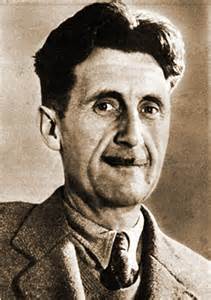
One good place to start a study of the use of language is with George Orwell's magnificent treatise on writing & rhetoric: Politics and the English Language.
Reagan's agenda in his own words: as the country prepares for another presidential political campaign, the memory of Ronald Reagan will no doubt be powerfully in mind for conservative & Republican voters. It might be a good idea to see the consistency and the changes in Reagan's approach to politics and policy across his life in politics. Below are three examples, from the beginning, peak and close of Reagan's political career, of speeches where Reagan set out his political vision.
Here is Reagan's first major venture on the national political stage, his Time for Choosing speech in support of the Goldwater campaign in 1964:
After serving two terms as governor of California and then running successfully in 1980 against President Jimmy Carter, Reagan delivered his first First Inaugural Address in 1981:
Finally, at the conclusion of his second term of office in 1989, President Reagan addressed the country in his Farewell Speech, talking about his hopes for the future of our country:
Conservatism is not an ideology: Reagan's political principles, both their flexibility and their deep consistencies, raise the question of how conservatism reconciles principle & prudence in the field of practical politics. Russell Kirk, one of the great explainers and developers of the conservative tradition in the 20th century, explained conservatism's fundamental approach:
The conservative understands that the circumstances of men are almost infinitely variable, and that any particular political or economic policy must be decided in the light of the particular circumstances of time and place -- an enlightened expediency, or prudence ... Conservatism, I repeat, is not an ideology. It does not breed fanatics. It does not try to excite the enthusiasm of a secular religion. If you want men who will sacrifice their past and present and future to a set of abstract ideas you must go to Communism, or Fascism, or Benthamism. But if you want men who seek, reasonably and prudently, to reconcile the best in the wisdom of our ancestors with the change which is essential to a vigorous civil social existence, then you will do well to turn to conservative principles. The high-minded conservative believes in Principle, or enduring norms ascertained through appreciation for the wisdom of dead generations, the study of history, and the reconciliation of authority with the altered circumstances of our present life. He is a highly reasonable person, although he looks with deep suspicion on the cult of Reason -- the worship of an abstract rationality which asserts that mundane planning is able to solve all our difficulties of spirit and community. But the high-minded conservative detests Abstraction, or the passion for forcing men and societies into a preconceived pattern divorced from the special circumstances of different times and countries.
From Prospects for Conservatives (Regnery Gateway: 1989), pg. 8-9.
Within that passage from Kirk is the antidote to virtually all of the big picture problems that have developed on the Right for the last 35 years.