"Is the Constitution of the United States, then, a natural law
document? No, it is not a philosophical treatise at all, but instead
a practical instrument of government. We are safe in saying, nevertheless, that the Framers, with few conceivable exceptions, believed
in the reality of natural law and had no intention of contravening
natural law by the instrument they drew up at Philadelphia; nor
did anyone suggest during the debates over ratification that the
Constitution might in any way conflict with the old truths of the
natural law."
Showing posts with label Russell Kirk. Show all posts
Showing posts with label Russell Kirk. Show all posts
Thursday, October 19, 2017
The link between the Constitution and natural law


Monday, October 16, 2017
Resolving the paradox of the American Revolution
Was the American Revolution a Real Revolution?
The American Conservative raises that question by re-publishing this essay by the late Robert Nisbet, a sociologist and one of the leading conservative thinkers of the post World-War II period: Was There An American Revolution? Nisbet covers a lot of ground in this essay, touching on everything from class and property to religious liberty. Nisbet's conclusion, contra other conservatives like Russell Kirk and M.E. Bradford, is that the American Revolution was indeed a real revolution, impacting social, cultural and religious aspects of American life, leading to a profound change not only in the formal political institutions of the country but also the underlying spirit of the nation. As Nisbet concludes:
Yet, at the time of the Revolution -- and it was a revolution in the sense that it cast off one set of political obligations and substituted another set -- its principles were grounded not in an abstract embrace of ideology but in constitutional premises and practices that tracked back deep into English common law. This common law patrimony was known to the colonists through their colonial charters and law courts, and through the study of the works of Sir William Blackstone. And yet, Blackstone's work furthered the cause of American Independence by dividing the colonists and the British government ever farther apart on the issue of representative government.
It is difficult to overestimate the impact that Blackstone had on the American Founding era, during both the revolutionary period and the formation of the American Republic afterward. For men of those times, Blackstone served as the source of their knowledge of the English common law tradition, as well as one of the major theorists of natural law. The close study of Blackstone was for many American lawyers their only academic exercise before qualifying for the bar, and more copies of Blackstone's mammoth Commentaries on the Laws of England sold in the American colonies and the early United States than sold in England itself.
With all that in mind, head on over the The Imaginative Conservative and read Richard Samuelson's essay on Blackstone's influence on our nation's struggle for independence: The Blackstonian Causes of the American Revolution. Samuelson does a very good job of demonstrating how the American Founders were shaped by Blackstone's theory of English constitutionalism while at the same time Blackstone's embrace of parliamentary supremacy made reconciliation between the rising American colonies and the Mother Country all the more problematic.
This eventually forced the colonists into the position of either submitting to Parliament without the limitation of the traditional rights and liberties of the colonies, or throwing off the authority of the King in Parliament to assert their own independence. As Samuelson writes:
So, Nesbit, Kirk, and Bradford were all right -- although in different ways. The American Revolution was indeed a true revolution, a casting off of the old in favor of the new, while at the same being being a revolution grounded in the established practices and perspectives of colonial society. The keys, as in so much of understanding the American Revolution, are found not only in the work of the American Founders, but in Burke and Blackstone as well.
I would argue, then, that there was indeed an American Revolution in the full sense of the word–a social, moral, and institutional revolution that effected major changes in the character of American society–as well as a war of liberation from England that was political in nature.
The line from the social revolution of the 1770s to the civil rights revolution of the 1960s is a direct one. It is a line that passes through the Civil War–itself certainly not without revolutionary implication–and through a host of changes in the status of Americans of all races, beliefs, and classes. The United States has indeed undergone a process of almost permanent revolution. I can think of no greater injustice to ourselves, as well as to the makers of revolution in Philadelphia, than to deny that fact and to allow the honored word revolution to be preempted today by spokesmen for societies which, through their congealed despotisms, have made real revolution all but impossible.The linkage between the revolutionary work of the American founding generation and the civil rights movement of the 1960s is one that was made repeatedly by many in the civil rights movement at the time, perhaps most notably by Martin Luther King, Jr. in The Letter From a Birmingham City Jail.
Yet, at the time of the Revolution -- and it was a revolution in the sense that it cast off one set of political obligations and substituted another set -- its principles were grounded not in an abstract embrace of ideology but in constitutional premises and practices that tracked back deep into English common law. This common law patrimony was known to the colonists through their colonial charters and law courts, and through the study of the works of Sir William Blackstone. And yet, Blackstone's work furthered the cause of American Independence by dividing the colonists and the British government ever farther apart on the issue of representative government.
It is difficult to overestimate the impact that Blackstone had on the American Founding era, during both the revolutionary period and the formation of the American Republic afterward. For men of those times, Blackstone served as the source of their knowledge of the English common law tradition, as well as one of the major theorists of natural law. The close study of Blackstone was for many American lawyers their only academic exercise before qualifying for the bar, and more copies of Blackstone's mammoth Commentaries on the Laws of England sold in the American colonies and the early United States than sold in England itself.
With all that in mind, head on over the The Imaginative Conservative and read Richard Samuelson's essay on Blackstone's influence on our nation's struggle for independence: The Blackstonian Causes of the American Revolution. Samuelson does a very good job of demonstrating how the American Founders were shaped by Blackstone's theory of English constitutionalism while at the same time Blackstone's embrace of parliamentary supremacy made reconciliation between the rising American colonies and the Mother Country all the more problematic.
This eventually forced the colonists into the position of either submitting to Parliament without the limitation of the traditional rights and liberties of the colonies, or throwing off the authority of the King in Parliament to assert their own independence. As Samuelson writes:
Blackstone made colonists choose between being free and being British. The necessities of an empire run by Parliament from the imperial center became incompatible with the liberties of British subjects living on the imperial periphery. In his essay, “The Irrelevance of the Declaration,” Reid points out that once one gets past the first two paragraphs, the Declaration of Independence is nothing more than a common law indictment of King George. In other words, declaring independence from Great Britain was a final act of devotion to the Whig constitutional principles that Anglo-Americans had imbibed since their settlement. Americans assumed a separate and equal station with their mother country so that they could enjoy the rights of Britons, and continue the mission of a free, protestant people in America.That last observation cannot be emphasized enough. For the American patriots, Protestantism was a key feature of American political economy. No less a statesman than Edmund Burke recognized this in his famous analysis of the role that dissenting Protestantism played in the American commitment to liberty, given in his Speech on Conciliation with the Colonies, dated March 22, 1775:
Religion, always a principle of energy, in this new people is no way worn out or impaired; and their mode of professing it is also one main cause of this free spirit. The people are Protestants; and of that kind which is the most adverse to all implicit submission of mind and opinion. This is a persuasion not only favourable to liberty, but built upon it. I do not think, Sir, that the reason of this averseness in the dissenting churches, from all that looks like absolute government, is so much to be sought in their religious tenets, as in their history. Every one knows that the Roman Catholic religion is at least coeval with most of the governments where it prevails; that it has generally gone hand in hand with them, and received great favour and every kind of support from authority. The Church of England too was formed from her cradle under the nursing care of regular government. But the dissenting interests have sprung up in direct opposition to all the ordinary powers of the world; and could justify that opposition only on a strong claim to natural liberty. Their very existence depended on the powerful and unremitted assertion of that claim. All Protestantism, even the most cold and passive, is a sort of dissent. But the religion most prevalent in our northern colonies is a refinement on the principle of resistance; it is the dissidence of dissent, and the Protestantism of the Protestant religion. This religion, under a variety of denominations agreeing in nothing but in the communion of the spirit of liberty, is predominant in most of the northern provinces; where the Church of England, notwithstanding its legal rights, is in reality no more than a sort of private sect, not composing most probably the tenth of the people. The colonists left England when this spirit was high, and in the emigrants was the highest of all; and even that stream of foreigners, which has been constantly flowing into these colonies, has, for the greatest part, been composed of dissenters from the establishments of their several countries, and have brought with them a temper and character far from alien to that of the people with whom they mixed.And it is in Burke's analysis that we find the resolution of the paradox of the American Revolution -- that it was a revolution that changed everything, while at the same time being a revolution "prevented and not made" (to use Russell Kirk's phrase). The American principles vindicated by the Revolution where themselves principles grounded in heritage of most of the colonists -- a heritage that valued the stability of English law but which also chaffed at the restrictions of English government, particularly those restrictions that were felt in the religious sphere. There was, in Burke's wording, "the principle of resistance" met with the "spirt of liberty." And it was this spirit of liberty that drew in immigrants from non-British lands, immigrants who more often than not were dissents of the religious establishments in their native countries.
So, Nesbit, Kirk, and Bradford were all right -- although in different ways. The American Revolution was indeed a true revolution, a casting off of the old in favor of the new, while at the same being being a revolution grounded in the established practices and perspectives of colonial society. The keys, as in so much of understanding the American Revolution, are found not only in the work of the American Founders, but in Burke and Blackstone as well.
Wednesday, October 26, 2016
Imperfectability and the inevitability of reform
One of the principles of a conservative approach to politics & life is the idea of imperfectability. No perfect order exists this side of heaven, and all human endeavors have faults and failures. The late Russell Kirk expressed this concept well in his summary, Ten Conservative Principles:
For a conservative, principle remains steady, but the application of principle varies from time and time, culture to culture, circumstance to circumstance. What works for one people in one era may not work for a different people in a different era. Imperfectability and the inevitability of change make provisional all human arrangements: the only constant is change. For the conservative, though, the type of change, the type of reform, makes all the difference. Change in continuity with the past, developmental change that preserves diversity, community and human flourishing is the conservative goal. Not the preservation or restoration of a Golden Age that never existed, but the continuing expansion of the human spirit to avoid what Kirk identified as the two-fold threat to civic order: violent discontent or fatal boredom.
Sixth, conservatives are chastened by their principle of imperfectability. Human nature suffers irremediably from certain grave faults, the conservatives know. Man being imperfect, no perfect social order ever can be created. Because of human restlessness, mankind would grow rebellious under any utopian domination, and would break out once more in violent discontent—or else expire of boredom. To seek for utopia is to end in disaster, the conservative says: we are not made for perfect things. All that we reasonably can expect is a tolerably ordered, just, and free society, in which some evils, maladjustments, and suffering will continue to lurk. By proper attention to prudent reform, we may preserve and improve this tolerable order. But if the old institutional and moral safeguards of a nation are neglected, then the anarchic impulse in humankind breaks loose: “the ceremony of innocence is drowned.” The ideologues who promise the perfection of man and society have converted a great part of the twentieth-century world into a terrestrial hell.The conservative rejection of the idea of a perfect temporal order goes hand in hand with the conservative emphasis on reform. To be a conservative is to embrace the principle of reform, that institutions and policies must undergo rejuvenation when necessary to remain relevant in the fact of the relentless change that besets all things under the Sun. For this reason, ideologies that seek to freeze human government or society at a certain point are doomed to produced miserable failure, for the friction of change produces heat that melts away all attempts at stasis.
For a conservative, principle remains steady, but the application of principle varies from time and time, culture to culture, circumstance to circumstance. What works for one people in one era may not work for a different people in a different era. Imperfectability and the inevitability of change make provisional all human arrangements: the only constant is change. For the conservative, though, the type of change, the type of reform, makes all the difference. Change in continuity with the past, developmental change that preserves diversity, community and human flourishing is the conservative goal. Not the preservation or restoration of a Golden Age that never existed, but the continuing expansion of the human spirit to avoid what Kirk identified as the two-fold threat to civic order: violent discontent or fatal boredom.
Tuesday, March 01, 2016
When Russell Kirk met Malcolm X

Somewhat to my surprise, I found Malcolm X to be a man of considerable intellectual powers, certainly no conventional demagogue, dignified, and rather winning in manner. He was a strange being, but no fool or madman. He had then just returned from a pilgrimage to Mecca, capping his formal conversion to the Mohammedan faith.
He rose out of violence and crime in the urban jungles, and he died by violence and crime. Yet the convicted burglar who made himself a minor power in the land did not appear to be a natural fanatic or incendiary.

Given Kirk's own eclectic conservatism, one can understand the appeal parts of Malcolm's message may had to him. At the same time, Kirk had critical distance when it came to Malcolm X's prior activism in the cause of racial separation. Kirk's embrace of the limits of politics and his understanding of America as a land of diverse peoples & ways of life made Kirk skeptical of the idea that races here could ever be separated. Efforts to do so, he wrote, "never could be realized in America."

I should have liked to talk to Malcolm X longer, to ascertain if truly there was forever a great gulf fixed between us. But that unquiet spirit will not be heard again.To be an unquiet spirit in an unquiet age is no vice. The tragedy of Malcolm X's life is that it was cut short, just as he was finding his own authentic voice.
Sunday, January 24, 2016
Kirk's fourth conservative principle: slow and incremental reform
After a brief break, considering that we are in the political season for both parties, now on the cusp of the Iowa caucuses, let's take up again the late Russell Kirk's ten conservative principles. Below is his fourth principle on the conservative approach to politics, a short statement on how conservatives approach government action and reform. As Kirk concisely explains, conservatism is not opposed to reform, nor is it oppose in principle to government action within its proper sphere. But conservatism does insist that government policy be guided by prudence, and above all else that it not be undertaken impulsively:
Fourth, conservatives are guided by their principle of prudence. Burke agrees with Plato that in the statesman, prudence is chief among virtues. Any public measure ought to be judged by its probable long-run consequences, not merely by temporary advantage or popularity. Liberals and radicals, the conservative says, are imprudent: for they dash at their objectives without giving much heed to the risk of new abuses worse than the evils they hope to sweep away. As John Randolph of Roanoke put it, Providence moves slowly, but the devil always hurries. Human society being complex, remedies cannot be simple if they are to be efficacious. The conservative declares that he acts only after sufficient reflection, having weighed the consequences. Sudden and slashing reforms are as perilous as sudden and slashing surgery.--Russell Kirk, Ten Conservative Principles (1993).
Friday, January 22, 2016
What kind of classical liberalism does the New Reform Club seek to conserve?
A recent reader sent along that inquiry after finding his way to the New Reform Club thanks to one of the recent Instalanches now regularly triggered by the excellent work done by our co-blogger, Seth Barrett Tillman. While I am sure that my colleagues here at the New Reform Club can each come up with their own take on how our work her ties back to the classical liberal tradition, I thought I would share my own answer to that question. In short, this blog exists to further the classical liberal tradition's orientation to politics and culture: an openness to argument & dialogue, grounded in a normative understanding of human nature, expressed through the language of natural law & natural rights, giving rise to a commitment to government limited in scope but vigorous in its legitimate functions, supported by a society that embraces innovation & individual initiative, mediating institutions and the vitality of traditional bonds of social order found in family, faith & friendship.
Okay. That was a long sentence. Let's take a breath. Okay, now back to it.
This approach to political and cultural engagement is most often associated with the political right today, but it not exclusively the preserve of the right. Left-conservatives like Christopher Lasch and Bill Kaufmann have embraced much of its wisdom, as have paleo-conservatives like Russell Kirk and M.E. Bradford. Distributionists like Belloc and Chesterton also fit comfortably within this definition. Belloc perhaps most of all due to his career as a member of Parliament, elected as part of the original Liberal Party in Great Britain, the successor party to the Whigs of blessed memory, which in turn had been the political home of the English statesman and grandfather of modern conservatism Edmund Burke.
As Russell Kirk once commented of Burke, "he was a conservative because he was a liberal." It is in that sense that this blog embodies the grand tradition of classical liberalism. It avoids the ideological fervor of both modern left-liberalism and both left- and right-libertarianism. It seeks to cultivate the garden of discourse with strong opinions and strong convictions, preferring disagreement to superficial conformity. Embracing the wisdom of the liberal approach to politics that developed in the West in the aftermath of Reformation and Enlightenment, it seeks to conserve those Permanent Things that exist both above and beyond the control of the State, while recognizing the positive role that government plays when active within the proper sphere of its authority. This commitment to the liberal approach to politics is grounded not in relativism or in a sense of the futility of politics to discern moral order, but rather in the understanding that there exists a moral order discernible to human reason through observation of and reflection upon natural law.
And what is this natural law? For this we rely again on the commentary of Russell Kirk, this time from his lecture The Case For and Against Natural Law (1993):
And what is this natural law? For this we rely again on the commentary of Russell Kirk, this time from his lecture The Case For and Against Natural Law (1993):
Objectively speaking, natural law, as a term of politics and jurisprudence, may be defined as a loosely knit body of rules of action prescribed by an authority superior to the state. These rules variously (according to the several differing schools of natural-law and natural rights speculation) are derived from divine commandment; from the nature of humankind; from abstract Reason; or from long experience of mankind in community. But natural law does not appertain to states and courts merely. For primarily it is a body of ethical perceptions or rules governing the life of the individual person, quite aside from politics and jurisprudence. [...] The natural law should not be taken for graven Tables of Governance, to be followed to jot and tittle; appealed to in varying circumstances, the law of nature must be applied with high prudence. As Alessandro d'Entreves writes, "The lesson of natural law is in fact nothing but an assertion that law is a part of ethics." And, he concludes "The lesson of natural law [is] simply to remind the jurist of his own limitations.... This point where values and norms coincide, which is the ultimate origin of law and at the same time the beginning of moral life proper, is, I believe, what men for over two thousand years have indicated by the name of natural law." On the one hand, natural law must be distinguished from positive or statutory law, decreed by the state; on the other, from the "laws of nature" in a scientific sense -- that is, from propositions expressing the regular order of certain natural phenomena. Also natural law sometimes is confounded with assertions of "natural rights," which may or may not be founded upon classical and medieval concepts of natural law.Acknowledgement of natural law, the avoidance of ideological dogmatism, the adherence to tradition, and an understanding that this side of heaven, change is inevitable and reform desirable mark this blog's approach to the issues of the day. At the same time, this blog recognizes that constructive reform preserves a continuity with the past that is integrated rather than fragmented. Beneficial reform does not embrace disruptive change for the sake of disruption. All of us stand or fall as part of a great chain of being that links our ancestry with future generations. To uphold these bonds, these mystic cords (to borrow a phrase from Lincoln), is the task of everyone who identifies as a classical liberal. It is also the task of the New Reform Club.
Edmund Burke, that great conservative and great liberal, would expect no less.
Sunday, December 06, 2015
Russell Kirk's conservative principle no. 2: society is organic
The Sage of Mecosta's second conservative principle involves the nature of society and the necessity of continuity in social order:
Second, the conservative adheres to custom, convention, and continuity. It is old custom that enables people to live together peaceably; the destroyers of custom demolish more than they know or desire. It is through convention—a word much abused in our time—that we contrive to avoid perpetual disputes about rights and duties: law at base is a body of conventions. Continuity is the means of linking generation to generation; it matters as much for society as it does for the individual; without it, life is meaningless. When successful revolutionaries have effaced old customs, derided old conventions, and broken the continuity of social institutions—why, presently they discover the necessity of establishing fresh customs, conventions, and continuity; but that process is painful and slow; and the new social order that eventually emerges may be much inferior to the old order that radicals overthrew in their zeal for the Earthly Paradise.
Conservatives are champions of custom, convention, and continuity because they prefer the devil they know to the devil they don’t know. Order and justice and freedom, they believe, are the artificial products of a long social experience, the result of centuries of trial and reflection and sacrifice. Thus the body social is a kind of spiritual corporation, comparable to the church; it may even be called a community of souls. Human society is no machine, to be treated mechanically. The continuity, the life-blood, of a society must not be interrupted. Burke’s reminder of the necessity for prudent change is in the mind of the conservative. But necessary change, conservatives argue, ought to be gradual and discriminatory, never unfixing old interests at once.
Saturday, December 05, 2015
Russell Kirk's Ten Conservative Principles: moral order is no. 1
During this election cycle, for those of us who consider ourselves to be conservative, it might be helpful to go back and think again about the basic principles of a conservative approach to political, economic & social issues. Conservativism, as Russell Kirk often reminded his readers, is not an ideology. Rather, it is an approach to thinking about questions of social, political, legal, spiritual & moral order. This approach, according to Kirk, is typified by several different characteristics, or as Kirk called them, "sentiments." For the next two weeks or so, I would like to spend some time reprinting Kirk's understanding of these different conservative sentiments, posting a different principle by Kirk. Kirk's essay, Ten Conservative Principles, is available in its entirety here. Here's the first principle:
First, the conservative believes that there exists an enduring moral order. That order is made for man, and man is made for it: human nature is a constant, and moral truths are permanent. This word order signifies harmony. There are two aspects or types of order: the inner order of the soul, and the outer order of the commonwealth. Twenty-five centuries ago, Plato taught this doctrine, but even the educated nowadays find it difficult to understand. The problem of order has been a principal concern of conservatives ever since conservative became a term of politics.
Our twentieth-century world has experienced the hideous consequences of the collapse of belief in a moral order. Like the atrocities and disasters of Greece in the fifth century before Christ, the ruin of great nations in our century shows us the pit into which fall societies that mistake clever self-interest, or ingenious social controls, for pleasing alternatives to an oldfangled moral order. It has been said by liberal intellectuals that the conservative believes all social questions, at heart, to be questions of private morality. Properly understood, this statement is quite true. A society in which men and women are governed by belief in an enduring moral order, by a strong sense of right and wrong, by personal convictions about justice and honor, will be a good society—whatever political machinery it may utilize; while a society in which men and women are morally adrift, ignorant of norms, and intent chiefly upon gratification of appetites, will be a bad society—no matter how many people vote and no matter how liberal its formal constitution may be.
Wednesday, October 14, 2015
Norms and progress

Real progress consists in the movement of mankind toward the understanding of norms, and toward conformity to norms. Real decadence consists in the movement of mankind away from the understanding of norms, and away from obedience to norms.- Russell Kirk (1918-1994), American historian and conservative writer, Enemies of the Permanent Things (1969).
Thursday, October 01, 2015
Russell Kirk and a conservatism of continuity
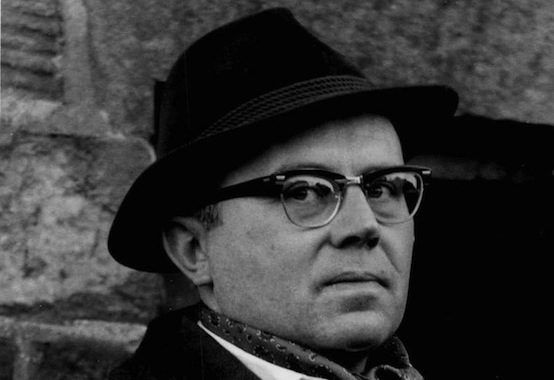
- Rights and Duties: Reflections on Our Conservative Constitution.
- The Roots of American Order
- The American Cause
One of the key parts of Kirk's approach to conservatism is the principle of continuity. It is this principle of continuity that leads American conservatism to incorporate significant elements from the classical liberal tradition As Patrick J. Deneen writes over at Front Porch Republic in his post Is There a Conservative Tradition in America?, from the time of the Founding forward much of American conservatism has been rooted in liberalism. After describing some of what he sees as basic tenets of American conservatism, Deneen explains:
This helps us understand, for example, how someone as central to the modern American conservative tradition like Ronald Reagan could cite Thomas Paine so much (more than any other Founder, as historian John Patrick Diggins discusses in his biography of Reagan). American conservatism is not a refutation of the liberal tradition as much as it is a strand within that tradition. This is one of the things that makes American conservatives stand out from their Tory counterparts in Canada and the UK, and from their Christian Democratic counterparts in Germany and Italy.
Deneen makes another point in his post, which is to identify a more traditional, non-liberal conservatism with the anti-federalist movement during the debate over the Constitution. According to Deneen, it is the anti-federalists, with their aversion to centralized government and the mechanisms for national action located within the then-novel Constitution, who represent the conservative spirit in the early American context. Modern American conservatives, Deneen contends, defend a Constitution that leads inexorably towards the kind of big-government activism that they claim to eschew. As Deneen puts it at the close of his article:
In this view, while conservatism has certain common principles and practices, it evidences pluralism as well, differing from country to country, from time to time, from place to place. Italian conservatism, Chinese conservatism, Argentinian conservatism, Yankee conservatism not only vary greatly, they should vary greatly. As both Kirk and Oakeshott consistently wrote, there is no single conservative ideology upon which to build a political program. It is diverse. Conservatism can be thought of more as a disposition than a doctrine, more of a way of approaching the world than a specific agenda that is uniform across time and space. And that is part of its strength and appeal, not a weakness to be overcome by ideological purity.
From that perspective, Kirk approached the Constitution as a fundamentally conservative document, as an attempt to preserve the best elements of the English legal and political tradition, adapted to the culture and context of America, as possible, while allowing for the prudential and necessary increase in the powers of the federal government that were necessary to preserve the nation from the disaster that was brewing under our first constitution, the Articles of Confederation.
As for the anti-federalists as conservatives, Kirk himself did not think of them as such. Kirk mostly viewed the anti-federalists as representatives of radicalism within American public life. They were ideological thinkers, caught in abstraction, unable to understand that the science of statesmanship was the study, as Burke noted, of necessary change. Politics cannot remain unchanging; just as change is the pattern of biological life, reform is part of the life of the body politic. However reform should only be undertaken when necessary, not simply because revolutions, as Jefferson once said, help to "clear the atmosphere."
For Kirk, the conservatives of the early American Republic were the Federalists, particularly John Adams, and the Tertium Quids led by John Randolph of Roanoake. He wrote at length about both men in his masterwork about the conservative intellectual tradition, The Conservative Mind. Adams and Randolph embodied the kind of cautious statesmanship, attached to principle but not to ideology, concerned with preserving order, justice, hearth and home that exemplifies, in Kirk's view, the conservative approach to politics. Such an approach is concerned with continuity more than ideology, with the coherence of a civilization in support of the Permanent Things rather than the imposition of a pure agenda on the communities and individuals that make up a nation.
[E]very characteristic that I’ve listed is actually a species of liberalism. I don’t mean that they are liberal in the way that we typically use the word to describe people like Nancy Pelosi or Michael Dukakis; rather, I mean liberal in its classical conception, that political philosophy that arose in the seventeenth and eighteenth centuries with its deepest origins in the Social Contract theory of Thomas Hobbes, further refined by John Locke, amended by Adam Smith and Montesquieu, and put into effect by our Founders, especially in those two founding documents The Declaration of Independence and the Constitution. To be clear – there is a species of conservatism within this tradition, to be sure – about which I’ll say more – but at the outset it needs to be acknowledged that we are speaking here of the difference between conservative liberals and progressive liberals, and not typically non- or anti-liberal conservatives and liberals per se.The point is well taken. Unlike European conservativism, which developed out of the altar and throne alliances that were the principal political fruit of the Reformation, American conservatism largely developed within a cultural and political milieu that strongly emphasized individual natural rights as understood through the British Enlightenment, along with some critical thinkers like Montesquieu who reflected on the British political tradition.
This helps us understand, for example, how someone as central to the modern American conservative tradition like Ronald Reagan could cite Thomas Paine so much (more than any other Founder, as historian John Patrick Diggins discusses in his biography of Reagan). American conservatism is not a refutation of the liberal tradition as much as it is a strand within that tradition. This is one of the things that makes American conservatives stand out from their Tory counterparts in Canada and the UK, and from their Christian Democratic counterparts in Germany and Italy.
Deneen makes another point in his post, which is to identify a more traditional, non-liberal conservatism with the anti-federalist movement during the debate over the Constitution. According to Deneen, it is the anti-federalists, with their aversion to centralized government and the mechanisms for national action located within the then-novel Constitution, who represent the conservative spirit in the early American context. Modern American conservatives, Deneen contends, defend a Constitution that leads inexorably towards the kind of big-government activism that they claim to eschew. As Deneen puts it at the close of his article:
It’s true that “conservative liberalism” is more “conservative” than “progressive liberalism,” if we mean by that it takes at least some of its cues from an older, pre-liberal understanding of human beings and human nature. Still, its dominant liberal ethic – summed up in the five points I suggested at the outset – means that in nearly every respect, its official allegiances end up eviscerating residual pre-liberal conservative allegiances. In particular, it could be argued that conservative commitments 1-4 – that end by favoring consolidation (in spite of the claim to favor “limited” government), advancing imperial power and capitalism (i.e., why consolidation is finally necessary), and stressing individual liberty, are all actively hostile to commitment number 5 – the support for family and community. It is a rump commitment without a politics to support it, and one that daily undergoes attack by the two faces of contemporary liberalism, through the promotion of the Market by the so-called Right and the promotion of lifestyle autonomy by the Left. A true conservatism has few friends in today’s America.Deneen's thesis here is worthy of some considerable discussion. To properly understand the nature of conservatism during the founding period through today, one needs to grasp one of Kirk's key insights, namely that conservatism properly understood is non-ideological. This understanding of conservatism, developed here in America by Kirk and in the UK by by British political philosopher Michael Oakeshott, views conservatism as primarily concerned about preserving custom, tradition and usage in the face of unnecessary change. It is about depending upon the tried and the true, upon the consensus of community culture, upon the established patterns of family, religion and voluntary associations.
In this view, while conservatism has certain common principles and practices, it evidences pluralism as well, differing from country to country, from time to time, from place to place. Italian conservatism, Chinese conservatism, Argentinian conservatism, Yankee conservatism not only vary greatly, they should vary greatly. As both Kirk and Oakeshott consistently wrote, there is no single conservative ideology upon which to build a political program. It is diverse. Conservatism can be thought of more as a disposition than a doctrine, more of a way of approaching the world than a specific agenda that is uniform across time and space. And that is part of its strength and appeal, not a weakness to be overcome by ideological purity.
From that perspective, Kirk approached the Constitution as a fundamentally conservative document, as an attempt to preserve the best elements of the English legal and political tradition, adapted to the culture and context of America, as possible, while allowing for the prudential and necessary increase in the powers of the federal government that were necessary to preserve the nation from the disaster that was brewing under our first constitution, the Articles of Confederation.
As for the anti-federalists as conservatives, Kirk himself did not think of them as such. Kirk mostly viewed the anti-federalists as representatives of radicalism within American public life. They were ideological thinkers, caught in abstraction, unable to understand that the science of statesmanship was the study, as Burke noted, of necessary change. Politics cannot remain unchanging; just as change is the pattern of biological life, reform is part of the life of the body politic. However reform should only be undertaken when necessary, not simply because revolutions, as Jefferson once said, help to "clear the atmosphere."
For Kirk, the conservatives of the early American Republic were the Federalists, particularly John Adams, and the Tertium Quids led by John Randolph of Roanoake. He wrote at length about both men in his masterwork about the conservative intellectual tradition, The Conservative Mind. Adams and Randolph embodied the kind of cautious statesmanship, attached to principle but not to ideology, concerned with preserving order, justice, hearth and home that exemplifies, in Kirk's view, the conservative approach to politics. Such an approach is concerned with continuity more than ideology, with the coherence of a civilization in support of the Permanent Things rather than the imposition of a pure agenda on the communities and individuals that make up a nation.
Monday, July 20, 2015
Why study Edmund Burke?
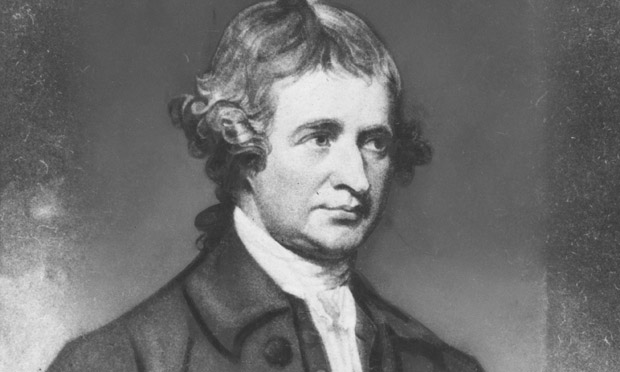
Because he was a principal defender of that world of reason, and order, and peace, and virtue in which the United States participated, through its inheritance of civilization. Constitution, custom, convention, and prescription give society a health continuity, as Burke knew; and he pointed out that prudent change is the means of our preservation; he understood how claims of freedom and claims of order must be kept in a tolerable tension. Such truths he taught not as a closet-philosopher, but as a practical statesman and manager of party. His speeches and pamphlets were read by the men of 1996 and the men of 1787 -- and studied with yet closer attention after 1789. No other political thinker of their own time was better known to the American leaders than was Burke.Burke was an English Whig politician and theorist, a member of Parliament at the time of the American Revolution and an ardent defender of the British constitution in the face of dangerous innovation from abroad. At the time time, he was a proponent of reform and sought reconciliation with the American colonies in the run-up to the American Revolution. At the foundation of the American concept of liberty is, among other sources, Burke. And as Kirk points out, not even the American Federalists can substitute for Burke's wisdom in guiding the course of prudential politics.
Friday, July 10, 2015
Five for Friday 3
Five posts to inspire reflection and conversation over the upcoming weekend. There's a common thread to all the posts, but instead of spoiling the fun by saying what it is, I'll leave it up to each reader to determine what links these five posts together. Have a great weekend!
 Frohen on Kirk on the Constitution: the University Bookman reprints a fine review by Bruce Frohnen of Russell Kirk's book on the American Constitution, Rights and Duties: The Character of Our Constitution. As Frohnen notes,
 Franklin and Jefferson on the Lord's Prayer: among the Founding Fathers, Franklin is often thought to be one of the most secular. This is a misreading of Franklin. While he was not an orthodox Christian, Frankly was a strong theist who consistently thought of his religious views in relationship with the general teachings of genetic colonial Protestantism regarding divine providence, the power of prayer and the Last Judgment. Franklin even went so far as to update the Lord's Prayer from the New Testament for his own personal use, and that prayer definitely reflects Franklin's own religious beliefs in a providential, personal God who is the ground of the moral law and who cares for each human person:
 If Franklin's version of the Lord's Prayer evidences a strong belief in a personal God who intervenes in human affairs and who answers prayer, the version provided by Thomas Jefferson in his own version of the Gospels, the so-called Jefferson Bible, is even more traditional -- deviating lightly from the version of the Lord's Prayer given in the Authorized King James Version. Jefferson is often invoked by those hostile to religion as someone who was opposed to religion. And it is true that Jefferson disagreed with orthodox Christianity and was a critic of organized religion for the most part. But he also was a strong believer in a theistic idea of God, a deity who governs the world through Providence. Jefferson's version of the Lord's Prayer evidences that belief:
When referring to the religious view of the Founders, it is easy to fall into anachronism on either side, either viewing the Founders as a whole as proto-evangelicals or viewing them as proto-free thinking "New Atheists." Both views are incorrect. Even the most secular of the Founders were strikingly religious by modern standards, and affirmed beliefs in strong-theism, of a personal God who intervenes in human affairs, responds to prayer, who authors a moral law, and who will hold each human being accountable for their violations of that law as well as for how they treat those who have sinned against them. Ben Franklin and Thomas Jefferson both testify to this fact.
 Rhetoric as a necessary component of a liberal education: "Oh, that's just rhetoric," is a refrain that sadly is heard far too often in regard to politics or any kind of civic engagement. But as this article by Sean Lewis over at The Imaginative Conservative rightly points out, the study of rhetoric -- the presentation of ideas and concepts -- is critical for liberal education. The study of rhetoric is one of the pillars of classical education, and the recovery of the integrity of rhetoric is essential to forming a disciplined mind.
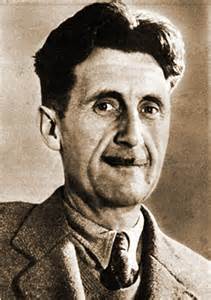
One good place to start a study of the use of language is with George Orwell's magnificent treatise on writing & rhetoric: Politics and the English Language.
Reagan's agenda in his own words: as the country prepares for another presidential political campaign, the memory of Ronald Reagan will no doubt be powerfully in mind for conservative & Republican voters. It might be a good idea to see the consistency and the changes in Reagan's approach to politics and policy across his life in politics. Below are three examples, from the beginning, peak and close of Reagan's political career, of speeches where Reagan set out his political vision.
Here is Reagan's first major venture on the national political stage, his Time for Choosing speech in support of the Goldwater campaign in 1964:
After serving two terms as governor of California and then running successfully in 1980 against President Jimmy Carter, Reagan delivered his first First Inaugural Address in 1981:
Finally, at the conclusion of his second term of office in 1989, President Reagan addressed the country in his Farewell Speech, talking about his hopes for the future of our country:
 Conservatism is not an ideology: Reagan's political principles, both their flexibility and their deep consistencies, raise the question of how conservatism reconciles principle & prudence in the field of practical politics. Russell Kirk, one of the great explainers and developers of the conservative tradition in the 20th century, explained conservatism's fundamental approach:
From Prospects for Conservatives (Regnery Gateway: 1989), pg. 8-9.
Within that passage from Kirk is the antidote to virtually all of the big picture problems that have developed on the Right for the last 35 years.

Early in the book, Kirk points out that our “Constitution had been designed by its Framers, in 1787, to conserve the order and the justice and the freedom to which Americans had grown accustomed.” Thus Kirk takes issue with ideologues who seek to convince us that America was created ex nihilo through the drafting of an abstractly philosophical Declaration of Independence. The Declaration, and the War for Independence, must be seen as our Founders saw them: as defensive measures intended to protect Americans’ traditional and chartered rights from an overreaching English Parliament.That's just a taste of Frohnen's review -- read it all, and better yet, get a copy of Kirk's book and read it closely. There is much wisdom there. I first read Kirk's book on the Constitution when I was a law student, and it was the first book by Kirk that I ever read. I was immediately impressed by his wisdom and insight, and quickly devoured everything he had written that I could get my hands on. I would have loved to have met him and studied with him, but alas that was not to be. But he lives on in his writings, and thanks to them we can all be Kirk's students. And he is a fantastic teacher! Of history and literature and on the roots of our country's polity and order.
1. Heavenly Father, 2. May all revere thee, 3. And become thy dutiful Children and faithful Subjects. 4. May thy Laws be obeyed on Earth as perfectly as they are in Heaven. 5. Provide for us this day as thou hast hitherto daily done. 6. Forgive us our trespasses, and enable us likewise to forgive those that offend us. 7. Keep us out of Temptation, and deliver us from Evil.Benjamin Franklin, Autobiography, post-1784, quoted in The Founders on Religion: A Book of Quotations, edited by James H. Hutson (Princeton Univ. Press: 2005), pg. 166.
Our Father which art in heaven, Hallowed by thy name. Thy kingdom come. Thy will be done, as in heaven, so in earth. Give us day by day our daily bread. And forgive us our sins; for we also forgive every one that is indebted to us. And lead us not into temptation; but deliver us from evil.Thomas Jefferson, The Jefferson Bible: The Life and Morals of Jesus of Nazareth (Beacon Press: 1989), pg. 87.
When referring to the religious view of the Founders, it is easy to fall into anachronism on either side, either viewing the Founders as a whole as proto-evangelicals or viewing them as proto-free thinking "New Atheists." Both views are incorrect. Even the most secular of the Founders were strikingly religious by modern standards, and affirmed beliefs in strong-theism, of a personal God who intervenes in human affairs, responds to prayer, who authors a moral law, and who will hold each human being accountable for their violations of that law as well as for how they treat those who have sinned against them. Ben Franklin and Thomas Jefferson both testify to this fact.
One good place to start a study of the use of language is with George Orwell's magnificent treatise on writing & rhetoric: Politics and the English Language.
Reagan's agenda in his own words: as the country prepares for another presidential political campaign, the memory of Ronald Reagan will no doubt be powerfully in mind for conservative & Republican voters. It might be a good idea to see the consistency and the changes in Reagan's approach to politics and policy across his life in politics. Below are three examples, from the beginning, peak and close of Reagan's political career, of speeches where Reagan set out his political vision.
Here is Reagan's first major venture on the national political stage, his Time for Choosing speech in support of the Goldwater campaign in 1964:
After serving two terms as governor of California and then running successfully in 1980 against President Jimmy Carter, Reagan delivered his first First Inaugural Address in 1981:
Finally, at the conclusion of his second term of office in 1989, President Reagan addressed the country in his Farewell Speech, talking about his hopes for the future of our country:
The conservative understands that the circumstances of men are almost infinitely variable, and that any particular political or economic policy must be decided in the light of the particular circumstances of time and place -- an enlightened expediency, or prudence ... Conservatism, I repeat, is not an ideology. It does not breed fanatics. It does not try to excite the enthusiasm of a secular religion. If you want men who will sacrifice their past and present and future to a set of abstract ideas you must go to Communism, or Fascism, or Benthamism. But if you want men who seek, reasonably and prudently, to reconcile the best in the wisdom of our ancestors with the change which is essential to a vigorous civil social existence, then you will do well to turn to conservative principles. The high-minded conservative believes in Principle, or enduring norms ascertained through appreciation for the wisdom of dead generations, the study of history, and the reconciliation of authority with the altered circumstances of our present life. He is a highly reasonable person, although he looks with deep suspicion on the cult of Reason -- the worship of an abstract rationality which asserts that mundane planning is able to solve all our difficulties of spirit and community. But the high-minded conservative detests Abstraction, or the passion for forcing men and societies into a preconceived pattern divorced from the special circumstances of different times and countries.
Subscribe to:
Posts (Atom)