Tradition is not the worship of ashes, but the preservation of fire.—Gustav Mahler
Showing posts with label reform. Show all posts

Wednesday, October 26, 2016

Imperfectability and the inevitability of reform

One of the principles of a conservative approach to politics & life is the idea of imperfectability. No perfect order exists this side of heaven, and all human endeavors have faults and failures. The late Russell Kirk expressed this concept well in his summary, Ten Conservative Principles:
Sixth, conservatives are chastened by their principle of imperfectability. Human nature suffers irremediably from certain grave faults, the conservatives know. Man being imperfect, no perfect social order ever can be created. Because of human restlessness, mankind would grow rebellious under any utopian domination, and would break out once more in violent discontent—or else expire of boredom. To seek for utopia is to end in disaster, the conservative says: we are not made for perfect things. All that we reasonably can expect is a tolerably ordered, just, and free society, in which some evils, maladjustments, and suffering will continue to lurk. By proper attention to prudent reform, we may preserve and improve this tolerable order. But if the old institutional and moral safeguards of a nation are neglected, then the anarchic impulse in humankind breaks loose: “the ceremony of innocence is drowned.” The ideologues who promise the perfection of man and society have converted a great part of the twentieth-century world into a terrestrial hell.
The conservative rejection of the idea of a perfect temporal order goes hand in hand with the conservative emphasis on reform. To be a conservative is to embrace the principle of reform, that institutions and policies must undergo rejuvenation when necessary to remain relevant in the fact of the relentless change that besets all things under the Sun. For this reason, ideologies that seek to freeze human government or society at a certain point are doomed to produced miserable failure, for the friction of change produces heat that melts away all attempts at stasis.

For a conservative, principle remains steady, but the application of principle varies from time and time, culture to culture, circumstance to circumstance. What works for one people in one era may not work for a different people in a different era. Imperfectability and the inevitability of change make provisional all human arrangements: the only constant is change. For the conservative, though, the type of change, the type of reform, makes all the difference. Change in continuity with the past, developmental change that preserves diversity, community and human flourishing is the conservative goal. Not the preservation or restoration of a Golden Age that never existed, but the continuing expansion of the human spirit to avoid what Kirk identified as the two-fold threat to civic order: violent discontent or fatal boredom.

Sunday, January 24, 2016

Kirk's fourth conservative principle: slow and incremental reform

After a brief break, considering that we are in the political season for both parties, now on the cusp of the Iowa caucuses, let's take up again the late Russell Kirk's ten conservative principles. Below is his fourth principle on the conservative approach to politics, a short statement on how conservatives approach government action and reform. As Kirk concisely explains, conservatism is not opposed to reform, nor is it oppose in principle to government action within its proper sphere. But conservatism does insist that government policy be guided by prudence, and above all else that it not be undertaken impulsively:
Fourth, conservatives are guided by their principle of prudence. Burke agrees with Plato that in the statesman, prudence is chief among virtues. Any public measure ought to be judged by its probable long-run consequences, not merely by temporary advantage or popularity. Liberals and radicals, the conservative says, are imprudent: for they dash at their objectives without giving much heed to the risk of new abuses worse than the evils they hope to sweep away. As John Randolph of Roanoke put it, Providence moves slowly, but the devil always hurries. Human society being complex, remedies cannot be simple if they are to be efficacious. The conservative declares that he acts only after sufficient reflection, having weighed the consequences. Sudden and slashing reforms are as perilous as sudden and slashing surgery.
--Russell Kirk, Ten Conservative Principles (1993).

Tuesday, October 27, 2015

Sir Thomas More as conservative reformer

What kind of reformer was Sir Thomas More? Often portrayed as a heroic martyr for the liberty of conscience, More had a long career in public service before his disagreement over the King's Great Matter led to his alienation from & eventual martyrdom by Henry VIII.  Here's an interesting reflection on Thomas More's work as part of the Northern Renaissance prior to the Reformation:  Thomas More, Christian Humanism and Utopia.  (Hat tip to the old Western Confucian blog.)  As the reflection points out, at the core of More's work as a lawyer, judge & statesman were some simple Christian principles:
He believed that through the wisdom and examples of the Holy Scriptures, specifically by serving one another in the active Christian love found in the Gospels, and the guidance by the universal Church and its doctrines, society could better itself until the time that Christ returned to earth.
That brief summary of More's key convictions explains how the Man for All Seasons pivoted from being a Church reformer in the period prior to the outbreak of the Reformation to such a staunch defender of Catholic orthodoxy & papal primacy during the Reformation -- a transformation that ultimately led to his martyrdom at the hands of Henry VIII.  Both before the Reformation & in that movement's early stages, More sought to defend the purity of the Catholic faith, first from the abuses present within the pre-Reformation Church & then from the destruction of the Catholic faith at the hands of a government seeking to impose Protestantism in England.

In that work, More is an almost perfect example of a conservative reformer. He was no radical; rather he sought to retain essential truths of the faith while working to correct abuses in the Church's way of life. Unlike his opponents, he was not a doctrinal innovator; he sought reform for the Church instead of its replacement. Once this is understood, More's actions during the early Reformation can be understood to be a continuation of his efforts to improve the Church prior to the Reformation. As such, More's basic approach to the question of reform stands well within the conservative approach to societal change set out by men such as Edmund Burke (himself a practicing Anglican who was married to a Catholic & sympathetic to Catholic freedom in England & Ireland).   Far from being a reactionary, a fundamentalist or religious fanatic (as he has been portrayed recently by the historical fiction Wolf Hall), More stands as a conservative voice for both reform of and fidelity to the Catholic Church, of necessary change within the constraints of substantive continuity.

What, then, of charges made against More that he tortured Protestants during his time in government, denying to his opponents the very right of conscience that he himself claimed when subject to coercive action by Henry's henchmen? The Supremacy and Survival blog has a good discussion of the actual historical record regarding Thomas More's actions in the suppression of heresy prior to Henry's break with Rome:
As summarized by John Guy in The Public Career of Sir Thomas More (Yale, 1980), "Serious analysis precludes the repetition of protestant stories that Sir Thomas flogged heretics against a tree in his garden at Chelsea. It must exclude, too, the accusations of illegal imprisonment made against More by John Field and Thomas Phillips. Much vaunted by J.A. Froude, such charges are unsupported by independent proof. More indeed answered them in his Apology with emphatic denial. None has ever been substantiated, and we may hope that they were all untrue" (165-66). See also G.R. Elton, Studies in Tudor and Stuart Politics and Government, Papers and Reviews 1946-1972, Volume 1, 158 ("It is necessary to be very clear about More's reaction to the changes in religion which he saw all around him. No doubt, the more scurrilous stories of his personal ill-treatment of accused heretics have been properly buried, but that is not to make him into a tolerant liberal.")
Paralleling this understanding of More, Cambridge historian and Reformation scholar Eamon Duffy has noted, "More was neither blood-soaked nor a hypocrite, but he was a man of his times, not of ours." And in that, More reflects one of the key characteristics of a conservative reformer: he was a man of his day, living not by abstraction but by the customs and the mores of hist time, tempered by prudential application of principle.

Wednesday, September 30, 2015

More on Radicalism

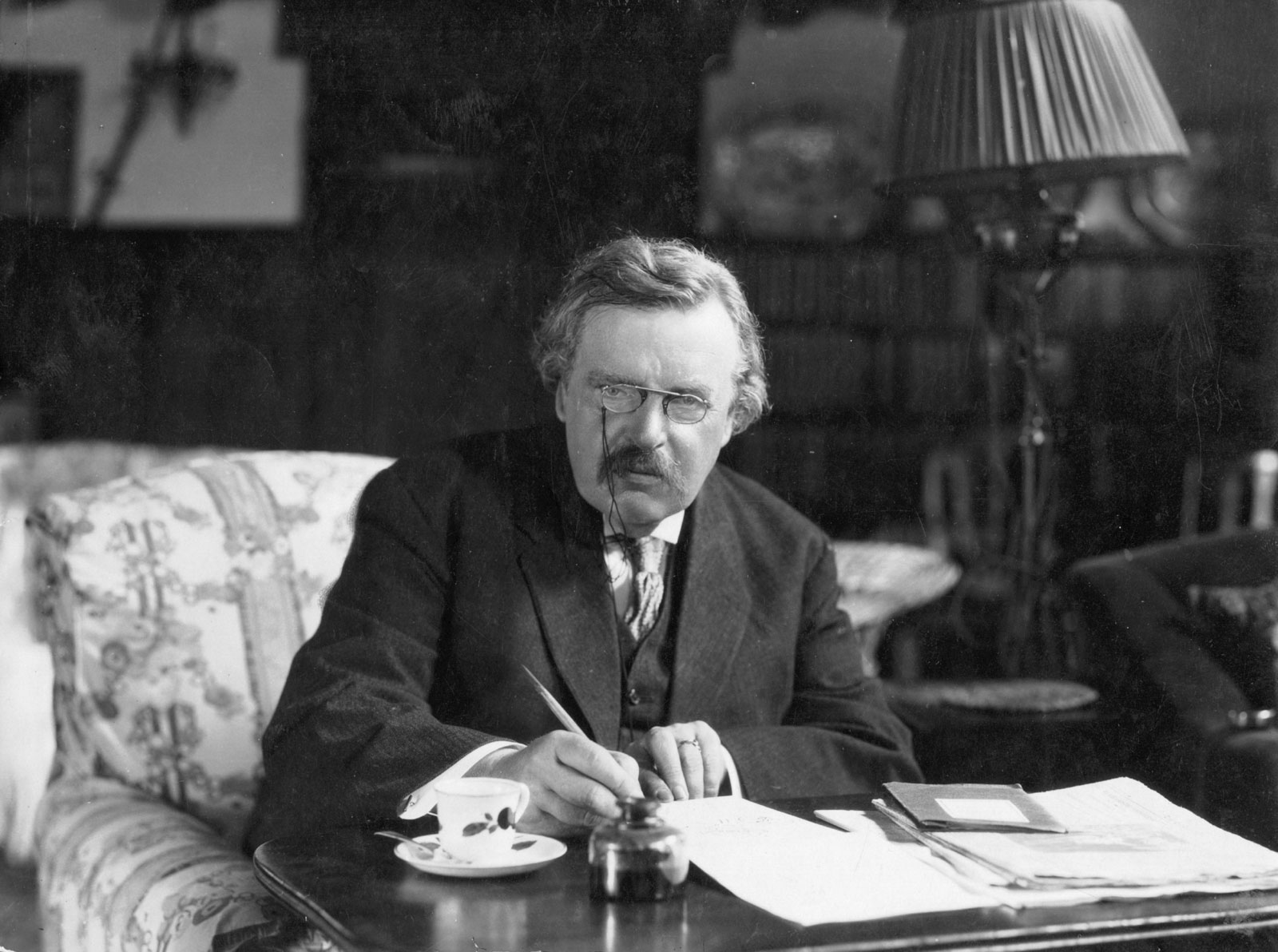
"The Reformer is always right about what's wrong. However, he is often wrong about what is right."

-- G.K. Chesterton (1874-1936).