Tradition is not the worship of ashes, but the preservation of fire.—Gustav Mahler
Showing posts with label Abraham Lincoln. Show all posts

Wednesday, February 03, 2016

Trump, Truthers, and the struggle for the common good


[F]actual truth is no more self-evident than opinion, and this may be among the reasons that opinion-holders find it relatively easy to discredit factual truth as just another opinion. Factual evidence, moreover, is established through testimony by eyewitnesses – notoriously unreliable – and by records, documents, and monuments, all of which can be suspected as forgeries. In the event of a dispute, only other witnesses but no third and higher instance can be invoked, and settlement is usually arrived at by way of a majority; that is, in the same way as the settlement of opinion disputes – a wholly unsatisfactory procedure, since there is nothing to prevent a majority of witnesses from being false witnesses. --Hannah Arendt[1]

In totalitarian regimes, which twisted facts to suit their “truth”, majorities of witnesses could be “encouraged” to bear false witness. In democracies majorities can be convinced that an opinion is a factual truth. In both cases, though a citizen armed with facts could hold power to account. Yet, for the citizen to hold power to account facts have to be embedded in the truth or political knowledge, which is why totalitarian regimes rewrite their history books. The totalitarian rulers know that the nature of political things cannot be changed or made otherwise by fiat, so they do the next best thing, they change the opinion about those facts.

In a democracy, political things are confused with everyday things. Even though buying a shirt would never be confused with casting a vote, they are often equated as a similar choice. What differentiates them though is that political things exist within a context that shows their political nature. To cast a vote, a citizen requires a ballot and an election. The ballot, the ballot box, and the election are political facts that create the context for political things to be revealed. Decent politics exists where people replace opinions of political things with knowledge of political things. The knowledge comes from the study of political things that are anchored in reality by facts. A political fact torn from such context is easily spotted as a falsehood such as claiming Abraham Lincoln died in 1965 or Donald Trump won the 2016 Iowa Republican Caucus.  However, political knowledge is often confused with political opinions that reflect prejudices or guesses about political things rather than knowledge of the political things. Unlike a totalitarian regime which often relies on violence to enforce its rule, the democracy becomes distorted as political opinions begin to replace facts.

In a democracy, those who want to control the public domain, who resist the effort to obtain political knowledge, will seek to reduce facts to opinions. The goal is to reach a state where any “fact” can be shaped to fit the “truth” the speaker wants to claim. A prominent example of this trend is Donald Trump's doubts about Barack Obama's birth certificate. He wants his opinion, that the President’s birth certificate is fraudulent, to replace the fact. He asserts his opinion to create a doubt about the facts so that they can be dismissed. Were he to achieve this, he could have greater power in the public domain for it would reflect his opinion and no the facts. However, to do this he has to pull apart the context within which the political fact exists, which is what makes the birth certificate valid. He has to dismiss the birth registration process, the bureaucratic context, and the integrity of all the people involved. 

Democracies have always been susceptible to demagogues. They want their opinion to be the basis by which the community acts and to do this they have to discredit political knowledge and political facts. When “truthers” seek to discredit political facts as a common standard for behaviour within the public domain their opinions take root. Such opinions flourish when they begin to replace the common standard of truth.  Without a common standard of truth, based on political facts, the common good that binds the country begins to fray. To destroy this common good, a liar that is one who wants to replace facts with opinions, will shape his “facts” to fit what his audience expects. Through this method, he undermines those who have political knowledge or political facts, a truth teller as unpersuasive.
If it be true that all governments rest on opinion, it is no less true that the strength of opinion in each individual, and its practical influence on his conduct, depend much on the number which he supposes to have entertained the same opinion. The reason of man, like man himself, is timid and cautious when left alone, and acquires firmness and confidence in proportion to the number with which it is associated. --James Madison Federalist #49
With truth tellers discredited, the “truthers” can impose their opinions as the truth without concern for verifiable political facts. Moreover, the “truther” will insist that any facts they disagree with are simply opinions. (It is your opinion that Obama’s birth certificate is valid. It is your opinion that steel will soften and melt under intense heat of burning jet fuel). The political is defended as a constitutional right. The “truther” wants to claim that it even if his political opinion is not true or factual he is entitled to speak it as constitutional right. He will assert that he has a right to be wrong. The danger is that no one has a right to be wrong about facts; Germany did invade Belgium, the Declaration of Independence was signed in 1776, Trump did lose in Iowa. Without the insistence on facts and the truth derived from them, decent politics begins to wither. The belief that that opinions replace facts means that a shared understanding of political things begins to fray. When opinions replace facts as the basis for political truth, when the difference between right and wrong is reduced to an opinion, then freedom based on the common good becomes doubtful.


[1] TRUTH AND POLITICS by Hannah Arendt Originally published in The New Yorker, February 25, 1967, and reprinted with minor changes in Between Past and Future (1968) and The Portable Hannah Arendt edited by Peter Baier (2000) and Truth: Engagements Across Philosophical Traditions edited by Medina and Wood (2005) p. 304

Thursday, August 06, 2015

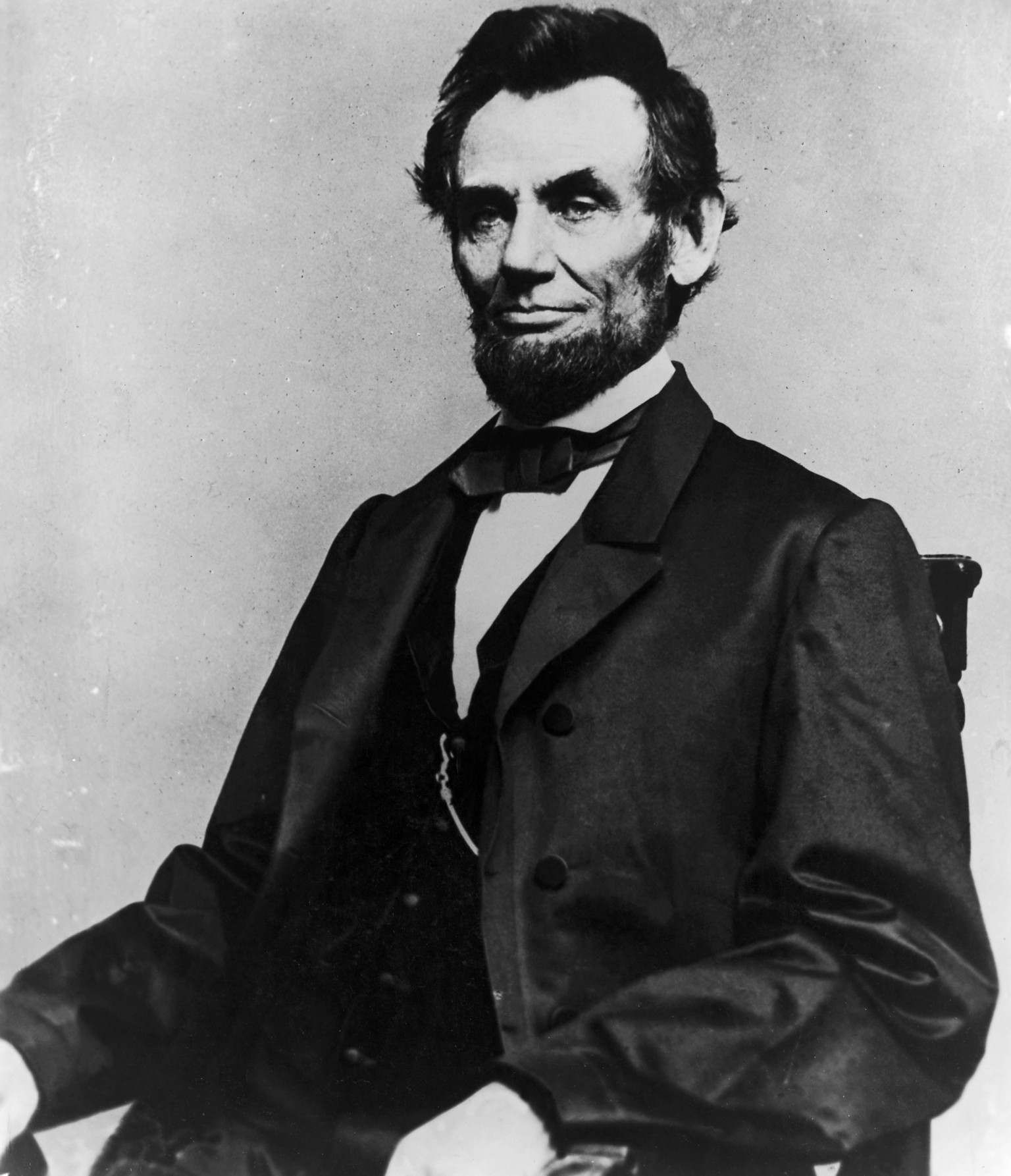
Abraham Lincoln was not the father of big government

That's the point brought out in in this piece over from the Heritage Foundation:  Was Lincoln the Father of Big Government?   As author Julia Shaw notes, it was not Lincoln who developed the idea of big government, but later progressive leaders like John Dewey, Teddy Roosevelt and Woodrow Wilson who crafted the modern idea of big government.  While the government did expand under the Lincoln administration, that was to deal with the emergency of the Civil War.  Lincoln had no desire or intention to craft a permanent expansion of the federal government once that crisis was over. 

Lincoln biographer Alan Guelzo comes to much the same conclusion as Shaw in this piece over at National Review Online here.  As Guelzo notes, federal spending and the reach of the federal government grew under the Lincoln administration, but only because of the pressures of the Civil War and inflation that the war inflicted on the economy.  Once the war was over, spending ratcheted down dramatically as the North returned to normalcy and the South was Reconstructed.  As Guelzo puts it:
Yes, the federal government grew enormously under Abraham Lincoln. But that was only in comparison to the bite-sized federal government that had prevailed in the 1850s, and it occurred only under the unprecedented circumstances of civil war. The real measure of Lincoln’s “big government” is how quickly it shrank back to more recognizable proportions once the wartime emergency was over. Rahm Emanuel might say that Lincoln wasted a good crisis. It would be better to say that Lincoln managed a crisis without making it worse.
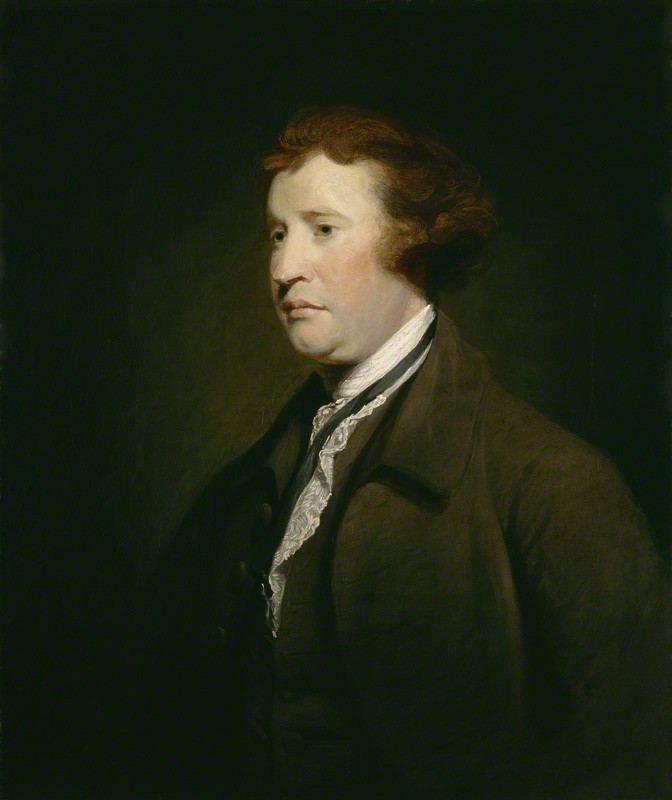
Guelzo's post is a welcome reminder that our second-greatest president believed in natural law, a free economy, and a limited role for the federal government in fostering and nurturing that economy.  He was a conservative in the tradition of classical liberalism  -- which means to say that he was a Whig.  As was another notable conservative on the other side of the Atlantic, Edmund Burke. While classical liberalism is not without its flaws, it fits within the broad tent of modern conservatism.  Certainly Lincoln's emphasis on natural justice, on the idea of equality under the law while recognizing that human beings have inevitable inequalities in terms of ability, on the notion that the role of government is to foster human liberty rather than to dictate outcomes, fit into what anyone today would recognize as a conservative viewpoint.  When taken together Lincoln's views paint a picture of a prudential and conservative approach to political order.

Interestingly enough, the points made by Shaw and Guelzo are echoed by one of the current writers most hostile to Lincoln, Thomas E. Woods.  Woods describes the point at which the executive branch of our federal government became so powerful in his book 33 Questions About American History You're Not Supposed to Ask (Crown Forum:  2007), pg. 136:
Was there a turning point that brought us down this road?  Abraham Lincoln certainly exercised extraordinary executive powers during the Civil War, as his supporters and critics alike acknowledge, but the very fact that the sixteenth president acted during wartime limits his usefulness as a source of precedents for peacetime chief executives (although to this day the "even Lincoln did thus-and-so: argument is still to be heard during episodes of government mischief).
If we had to pinpoint a single individual as being responsible for the modern presidency, it would be a man who in word and deed, in theory and practice, brought unprecedented vigor and visibility to the presidential office.  It would be a figure loved and admired to this day by mainstream Left and Right alike. It would be Theodore Roosevelt.
Big government is the result not of Lincoln's presidency or his policies, it is the product of the progressive era in American politics, the late 19th and early 20th century period that nationally coincides with the administrations of TR, Taft and Wilson.  It is at their doorstep that credit for a dominating executive branch and an expansive federal government needs to be deposited.  Leave poor old Abe Lincoln alone.  He simply wanted to save the Union for constitutional government.  Big government was neither his intent nor his effect.

Lincoln was a prudential conservative, committed to the principles of natural law and a limited government that was active and robust within its sphere of legitimate authority.  His defense of the Union, his devotion to the Constitution, and his desire for careful and cautious reform (evident in his approach to the issue of slavery) denotes him as a conservative, not a radical or proto-modern liberal.  In both good and ill, Russell Kirk was right when he adjudged Lincoln a conservative statesman. While there is much that is imperfect in Lincoln's political thought, there is much more that is right and in accord with a conservative approach to government.  Efforts to cast him from the ranks of conservative thinkers & leaders are mistaken.

Related items:
  • Here are some more popular but incorrect ideas about Lincoln, debunked over at the Washington Post by Lincoln scholar Harold Holzer:  Five myths about Abraham Lincoln.
  • University of St. Thomas law professor Michael Stokes Paulsen has a lecture posted on Vimeo and hosted by First Things on Lincoln's approach to the Constitution. Worth a watch. 

Friday, April 03, 2015

Abraham Lincoln and Kirkian conservatism

One finds, here and there, on the fringes of the Right and in the mainstream of the Left, the strange idea that Abraham Lincoln was not a conservative.  Portrayed as a radical centralizer and opponent of the old Constitution, he is viewed as a man who ushered America  into the era of big government. Nothing could be further from the truth. Lincoln was a conservative thinker and politician, a devotee not of the radical theories that would give rise to the modern Left but by the natural law principles of the Founding generation, particularly as expressed publicly by Thomas Jefferson.

The conservative mind of Abraham Lincoln is explored by T. Elliot Gaiser over at The Imaginative Conservative: Abraham Lincoln: A Man and a Leader of Men. Gaiser explores five key conservative principles and finds Lincoln as an exmplar of all five. Of course, Russell Kirk would approve of such an investigation of Lincoln, as he himself throughout his career contended repeatedly that Lincoln was a model of conservative statesmanship. For Kirk's views of Lincoln, see the following:

Monday, March 30, 2015

The merits and demerits of Mel Bradford's understanding of the American Founding

That's the topic of discussion in this short but interesting piece over at The Imaginative Conservative:  Mel Bradford and the Founding.

While I would agree with Bradford about the constitutional status of the Declaration of Independence (it isn't a legal document like the Constitution or statutes enacted under constitutional authority), I would disagree with him about what set behind Lincoln's appeal to the Declaration.  Lincoln was not attempting to re-found the country, rather, he was trying to call the country back to its origins, to the vision of its Founders, and to the idea of ordered liberty that was at the core of the Founders' vision. The Declaration's statement of equality was not a radical and absolute equality of position for all in society, it was a statement of the equality of all human beings before the Creator.  Because all men were equal in station before God, so should they be equal before the law that was predicated on the inalienable rights of life, liberty & the pursuit of happiness that come from the Creator and not the State.

It was Lincoln, in the great contest of the Civil War, who was the conservative, the one who sought to walk in the "old paths." Russell Kirk understood this well, and it is a pity that his friend Mel Bradford chose not to appreciate that aspect of Lincoln's political philosophy.

Wednesday, March 18, 2015

Burke, Lincoln & the Whig idea of reform

Greg Weiner has an essay posted over at The Imaginative Conservative exploring the link in the thought between the two great Whig statesmen: Edmund Burke, Abraham Lincoln and the Problem of Greatness. Both Burke and Lincoln were men of conservative temperament who believed in reform through, as Weiner notes, the Whig concepts of gradual improvement and sound morality. "These are," as he puts it, "the essence of prudence." Lincoln and Burke are models of the reforming statesman, who look not to the disruption of ambition and distinction but rather to another path for excellence in reform: "prudence itself as a form of excellence worth celebrating too." As Russell Kirk was fond of pointing out, one of the key frames through which a conservative politician & statements views politics is the virtue of prudence, a virtue that enables the right deployment of the other virtues in both person and public life. And in politics, one of the key principles of prudential reform is continuity.

Nowhere is Lincoln's vision of continuity & reform more on display than in the Gettysburg Address, delivered by the man who led the battle to save the Union in the face of those who would destroy the country in order to propagate the institution of chattel slavery:
Fourscore and seven years ago our fathers brought forth on this continent a new nation, conceived in liberty and dedicated to the proposition that all men are created equal. Now we are engaged in a great civil war, testing whether that nation or any nation so conceived and so dedicated can long endure. We are met on a great battlefield of that war. We have come to dedicate a portion of that field as a final resting-place for those who here gave their lives that that nation might live. It is altogether fitting and proper that we should do this. But in a larger sense, we cannot dedicate, we cannot consecrate, we cannot hallow this ground. The brave men, living and dead who struggled here have consecrated it far above our poor power to add or detract. The world will little note nor long remember what we say here, but it can never forget what they did here. It is for us the living rather to be dedicated here to the unfinished work which they who fought here have thus far so nobly advanced. It is rather for us to be here dedicated to the great task remaining before us--that from these honored dead we take increased devotion to that cause for which they gave the last full measure of devotion--that we here highly resolve that these dead shall not have died in vain, that this nation under God shall have a new birth of freedom, and that government of the people, by the people, for the people shall not perish from the earth.
Amen to that, Mr. President. Amen to that.

Friday, March 13, 2015

Five for Friday 1

#1: Richard Rodriguez on Pope Francis & "the new atheism."

The self-identified Catholic gay Latino sometimes-conservative sometimes-liberal writer has a strong take on the "new atheist" movement, identifying its basic approach as a species of intellectual bullying: Richard Rodriguez: "New Atheism" has a distinctly neo-colonial aspect.

Read the entire interview, and not just for Rodriguez's insights about the "new atheist" crowd. There's lots of wisdom there -- about the nature of Latino identity in the United States, affirmative action, and the desert nature of the three main monotheistic religions. He has some very interesting comments about the Catholic Church and Pope Francis, and much of the Left's obsession with sexual issues. Rodriguez, unfortunately, falls into the trap of viewing Pope Francis as being outside of continuity with his predecessors, but perhaps such an interesting and unorthodox thinker can be forgiven for falling a bit for some of the MSM spin about the Pope?

#2:  the influence of John Locke on Catholic social teaching.

Joe Hargrave explores that topic in this piece, detailing the use of Locke in the formulation of Catholic teaching regarding private property. While Pope Francis' words in Evangelii Gaudium have gotten a great deal of attention since the publication of that apostolic exhortation, that work does not modify any of the principles of Catholic social teaching as it stands. And as Hargrave explains, that social teaching has powerful roots in the work of John Locke.

#3: human dignity & the problem of the post-work economy.

Mark Steyn addresses that topic in this piece archived over at National Review Online: The Post-Work Economy. As Steyn notes, one of the most socially-disruptive aspects of unemployment is the effect dependency has on human dignity and the sense of self-sufficiency that is a prime aspect of human well-being. This effects not only economic standing, but also the health & psychological vitality of the people affected by being on the dole. Complicating this is an approach to governing that views dependency as a here-to-stay fixture of American civic & economic life. As Steyn writes:
The assumption is that mass, multi-generational dependency is now a permanent feature of life. A coastal elite will devise ever smarter and slicker trinkets, and pretty much everyone else will be a member of either the dependency class or the vast bureaucracy that ministers to them. And, if you’re wondering why every Big Government program assumes you’re a feeble child, that’s because a citizenry without “work and purpose” is ultimately incompatible with liberty. The elites think a smart society will be wealthy enough to relieve the masses from the need to work. In reality, it would be neo-feudal, but with fatter, sicker peasants. It wouldn’t just be “economic inequality,” but a far more profound kind, and seething with resentments.
There is dignity in work and such dignity is necessary for human beings to flourish. Government policy should be oriented towards creating conditions that foster human flourishing, rather than putting roadblocks in the way towards people having the ability & incentive to be self-supporting citizens.

#4: the Founders & classical education -- it wasn't about Latin, it was about virtue. 

To a degree difficult for many modern Americans to grasp, the Founding generation was shaped by classical literature from ancient Greece & Rome.  Virtually every literate person had at least passing acquaintance with the stories, myths & literature of the ancient West, and a surprisingly large percentage of Americans could read those works in one or both of their original languages, Greek & Latin. Yet, classical education in colonial and early republican America wasn't primarily about learning ancient languages, it was about training people in virtue & civic responsibility. E. Christian Kopff explores this aspect of early American education over at The Imaginative Conservative:  Inspired by Liberty & Virtue: the Classical Education of the Founders of the American Republic. Tolle, lege.

#5: what Abraham Lincoln can teach conservatives. 

Over at City Journal online, Jeremy Rozansky sketches out some thoughts on that topic: Honest Abe's Advice to Conservatives. Lincoln was no ideologue, but rather embraced a multi-faceted approach to politics that emphasized the need for balance between economic growth & innovation and the requirements of civil order & settled polity. As Rozansky writes, this is something from which Republicans of a conservative bent could learn:
Too often, Republicans have talked and acted as if the essence of conservatism is making budgets balance. It isn’t. American conservatism holds fast to a constellation of virtues: liberty, industriousness, and temperance, among others. Conservatives must emphasize these, and Lincoln provides unmatched instruction in how and why to do so. We should be wary of overemphasizing the pursuit of economic growth, or, as [writer Rich] Lowry calls it, the ethic of “work, work, work.” Growth is unsettling for many. The challenge is to formulate an economic agenda that balances innovation with social cohesion. If conservatives talk only about “opportunity,” they will overlook Americans’ other vital concerns about stability and everyday satisfaction. A conservatism that fails to speak to these sentiments won’t win—and won’t deserve to. Perhaps Lincoln can be of instruction here, too.
Bonus: some 80s music to get the weekend started!