It is fortunate that all the working drafts of the Address have survived, down to interlinings and inkblots, so that Washington’s primary authorship is categorically clear. Hamilton did not write it. Washington did, to a far greater extent than any contemporary American President since Calvin Coolidge.Washington's advice regarding foreign policy and his heart-felt sentiments regarding the Union and liberty are well worth pondering, and Bowling does an excellent job explaining the structure and content of Washington's ideas as expressed in the address. Well worth a read.
Tuesday, September 29, 2015
Washington's authorship of his Farewell Address
Over at the The University Bookman online, John Bowling has published an article outlining some of the history behind one of the greatest statements of American domestic and foreign policy ever made: The Farewell Address Revisited. As Bowling points out, President Washington's address wasn't solely the work of our first and greatest president, but was also the work of two other Founding Fathers as well, James Madison and Alexander Hamilton. That said, Washington was actively involved in the composition of the text, so much so that it is clear that he is its actual author, as the textual history of the address demonstrates. As Bowling puts it:


Monday, September 28, 2015
The public value of religious faith

The rituals of religion are shared and those who participate in them are drawn into another kind of relationship with their neighbours than those that prevail in the world of "getting and spending". People hunger for this kind of membership and the power of religion resides in its ability to provide it. In the rituals of a religion all worldly differences are overcome: the Sultan bows in submission beside his subjects and the good-natured fool takes communion beside the crook who cheated him. The ritual shines on both of them from a place beyond their ordinary experience and includes them in a community whose home is in some way not of this world. And in the Christian case the ritual records a primeval sacrifice, born of love.In addition to its ability to provide consolation and to help people deal with "metaphysical loneliness," Scruton contends that religion can incubate fundamental virtues like humility & justice as well as reinforce the principle of human equality:
[Religion] contains idiocy, prejudice, ignorance and stupidity in all the proportions that these are displayed by mankind as a whole. But that is its great virtue: it can draw people, whatever their talents and intellectual powers, into a shared apprehension of their condition. It can teach humility and justice, and remind the one with power, knowledge, wealth or artistic talent, that he is the equal of the one beside him in the moment of worship, however ignorant, weak or sinful that person might be. And to both of them it offers hope.I would add one point to Scruton's argument -- that religion can serve as a counterweight to both radical individualism and overwhelming state power. Religion at its best calls human beings beyond themselves to care for others and to be concerned not with their own wants and desires, but with transcendent moral truth. For the same reason, religion can serve as a balance against the power of the state -- when the state demands immoral action, religion can provide the intellectual framework and moral tradition to thwart tyranny. Martin Luther King, Jr., Oscar Romero, Franz Jäggerstatter, Lech Walesa, and others too numerous to mention testify to this fact.

This point is so strong that even Christopher Hitchens acknowledged it. As the dying writer said during a public discussion with his younger brother Peter:
When Lech Walesa was starting his work in the Polish shipyards and the Polish Militia and the outer ring of the Polish Army were closing in on Gdansk, he was interviewed with his then fairly small group, and he was asked: “Aren't you frightened, aren't you afraid? You've taken on a whole powerful state and army - aren't you scared?” And he said: “I'm not frightened of anything but God or anyone but God.”Christopher Hitchens then went on to acknowledge that he wouldn't have been able to say anything like that and that it was a "noble" idea; he was spot on with that observation. Almost to a man, the American Founders understood that it was faith in God, a God who stood above and beyond the State, that makes the idea of limited government possible, that makes the idea of human rights possible, that makes the idea of common, ordinary people rising up to resist tyranny possible. It is this concept that underpins some of the most soaring language in the Declaration of Independence:
We hold these truths to be self-evident, that all men are created equal, that they are endowed by their Creator with certain unalienable Rights, that among these are Life, Liberty and the pursuit of Happiness.--That to secure these rights, Governments are instituted among Men, deriving their just powers from the consent of the governed, --That whenever any Form of Government becomes destructive of these ends, it is the Right of the People to alter or to abolish it, and to institute new Government, laying its foundation on such principles and organizing its powers in such form, as to them shall seem most likely to effect their Safety and Happiness.This concept of transcendent authority in support of liberty was part and parcel of republican principle at the time of the American Founding. As Benjamin Rush put it:
I have always considered Christianity as the strong ground of republicanism. The spirit is opposed, not only to the splendor, but even to the very forms of monarchy, and many of its precepts have for their objects republican liberty and equality as well as simplicity, integrity, and economy in government. It is only necessary for republicanism to ally itself to the Christian religion to overturn all the corrupted political and religious institutions in the world.

The American abolitionists during the 19th century understood this. The civil rights movement was built on this idea. As Hitchens points out, one of the great leaders in modern Europe's struggle for liberty, Lech Walesa, lived this principle. Without religious faith, without the belief that God stands above all merely human institutions and will hold all of us accountable for the good and evil that we do, the tapestry of human rights, the rule of law and the freedom of the human person is difficult if not impossible to maintain over time.
As a consequence, religious faith, particularly Christianity, has a critical public role in the preservation of liberty & the idea of the limited state. Human beings will look for an ultimate authority -- as St. Augustine observed in his Confessions, "our hearts are restless until they rest in Thee, O Lord" -- and if people seek it not from heaven, they will look for it here on earth. And for examples of where an earthly ultimate authority leads, one needs only look at the slaughterhouses of the 20th century.
Sunday, September 27, 2015
Latin & the Founders

As for grammar, those who work through the writings of Thomas Jefferson, who had a classical education, or George Washington, who did not, or their English contemporaries Samuel Johnson, Edward Gibbon and Edmund Burke, will find that the syntax of Greek and Latin had affected the complexity and clarity of their expression and so of their thought. We need to know Latin if we want to think like the Founders.
Forrest MacDonald saw this clearly. "In thinking in eighteenth-century English...a rudimentary knowledge of Latin is highly useful; after all, every educated Englishman and American knew Latin, English words were generally closer in meaning to their Latin originals than they are today, and sometimes, as with the use of the subjunctive, it is apparent that an author is accustomed to formulating his thoughts in Latin."-- E. Christian Kopff, Open Shutters on the Past: Rome and the Founders in Vital Remnants: America's Founding and the Western Tradition (ed. by Gary L. Gregg II, ISI: 1999), pg. 74.
Saturday, September 26, 2015
Why Punish Wrongdoing? (with addendum)
Traditionally, what reasons justify punishing wrongdoing, such as criminal behaviour?
(1) Retribution;
(2) Specific deterrence or incapacitation (i.e., deterring the wrongdoer);
(3) General deterrence (i.e., deterring third-parties);
(4) Rehabilitation; and,
(5) Restitution.
Modern intellectual discourse favours the latter 4 justifications. Retribution is seen by many criminologists as primitive, if not irrational. But may a society -- i.e., a society aiming to be a just or good society -- impose punishment absent some strong conception of retribution? I am not so sure. Here is why:
[F]ar from pretending that retribution should have no place in our penal system, Mr. [] should recognize that it is logically impossible to remove it. If it were removed, all punishment would be rendered unjust. What could be more immoral than to inflict imprisonment on a criminal for the sake of deterring others if he does not deserve it? Or would it be justified to subject him to a compulsory attempt at reform which includes a denial of liberty unless, again, he deserves it?

--Letter to the Editor, from the Reverend A. M. Roff, Vicar of Longton, Lancashire, The Times (London), Dec. 24, 1977, at page 13.
Perhaps, one might go further than the Vicar and say that if society imposes punishment as a technical fix, absent a thick concept of desert, then the criminal moves from criminal to victim status (and, perhaps, to hero). In such a world, society and its criminal justice system become the aggressor-wrongdoer. Pace Kubrick's A Clockwork Orange (1971).
You will not find the Vicar of Longton's insight quoted in any British judicial decision or, alas, in any American one. But it was quoted by the Supreme Court of India. See Singh v. State of Punjab, All India Reports [1980] Supreme
Court 898. And we call them third world!
Seth Barrett Tillman
PS: My prior post is: Seth Barrett Tillman, Tillman on Values and Dignity, The New Reform Club (July 3, 2015, 5:57 PM), http://reformclub.blogspot.ie/2015/07/tillman-on-values-and-dignity.html
PPS: Thank you Instapundit. See Glenn Reynolds, Seth Barrett Tillman: Why Punish Wrongdoing?, Instapundit (Sept. 27, 2015, 2:00 PM), http://pjmedia.com/instapundit/215286/.
Addendum: I agree with the commenters below who suggested that pacification of third parties (including victims, and friends and families of victims) is an independent ground to punish wrongdoers.
Seth Barrett Tillman
Twitter:
https://twitter.com/SethBTillman ( @SethBTillman
)
PS: My prior post is: Seth Barrett Tillman, Tillman on Values and Dignity, The New Reform Club (July 3, 2015, 5:57 PM), http://reformclub.blogspot.ie/2015/07/tillman-on-values-and-dignity.html
PPS: Thank you Instapundit. See Glenn Reynolds, Seth Barrett Tillman: Why Punish Wrongdoing?, Instapundit (Sept. 27, 2015, 2:00 PM), http://pjmedia.com/instapundit/215286/.
Addendum: I agree with the commenters below who suggested that pacification of third parties (including victims, and friends and families of victims) is an independent ground to punish wrongdoers.
Friday, September 25, 2015
Forget the Framers, it's the Ratifiers who count
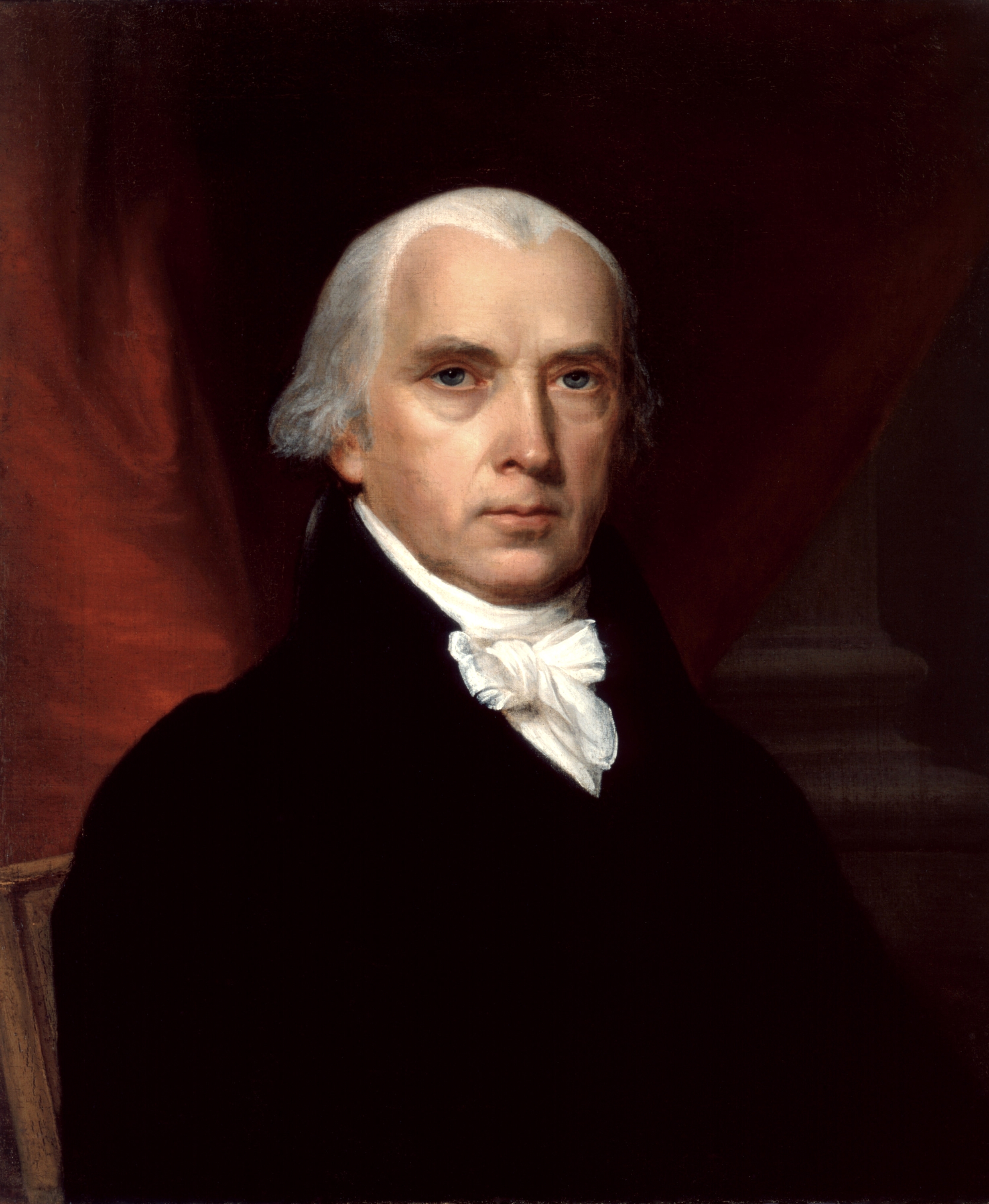
I'm down with Madison re "originalism," or "original public meaning" or whatever you want to call it. Forget the academic history lesson: Ethically it's not what the lawyers meant when they drew up the contract, it's what the parties thought they were agreeing to. This is why the Obergefell decision is a legal fiction at best, and a lie by any other measure:
"As a guide in expounding and applying the provisions of the Constitution, the debates and incidental decisions of the Convention can have no authoritative character.
However desirable it be that they should be preserved as a gratification to the laudable curiosity felt by every people to trace the origin and progress of their political Institutions, & as a source perhaps of some lights on the Science of Govt. the legitimate meaning of the Instrument must be derived from the text itself; or if a key is to be sought elsewhere, it must be not in the opinions or intentions of the Body which planned & proposed the Constitution, but in the sense attached to it by the people in their respective State Conventions where it recd. all the authority which it possesses."
--James Madison to Thomas Ritchie,15 Sept. 1821
You cannot reason a person out of radicalism, which is not reasoned into
CNN made history by giving Hugh Hewitt, an avowedly conservative --
not even Fox "fair and balanced," but an out conservative -- opinion
journalist, a seat at the table to ask conservative questions -- not just
questions conservatives want to ask, but stipulating conservative
premises and goals -- of the GOP presidential candidates. This is the
future: the long, stupid era of feigned neutrality is finally nearing an
end. Everyone knows the NYT, the LA Times, the national broadcast news shows, are all left. Just like everyone knows the
universities are left. And not just the universities but K-12. That's
why my wife and I made the decision to homeschool our kids. There's no
way we're turning them over to the left California education system.
“You cannot reason a person out of something he has not been reasoned into.” Jonathan Swift said that. Joseph Epstein, that great American essayist and former leftist, quoted him in his 1988 essay A Virtuecrat Remembers, blasting the left's radical, and dangerous, self-righteousness: "the Russian Revolution was nothing if not a revolution choreographed, orchestrated, and staged by intellectuals....[I]
The left doesn't try to reason people into leftism. It might not be religion in an accurate sense -- certainly, at most, a very poor one -- but it employs many of the tools used to instill religion: a captive audience and a controlled environment with a lack of meaningful choice; identity; and a language of morality: good and evil, praise and shame. Epstein's denunciation of the left sounds in apostasy of one's abandoned religion:
“You cannot reason a person out of something he has not been reasoned into.” Jonathan Swift said that. Joseph Epstein, that great American essayist and former leftist, quoted him in his 1988 essay A Virtuecrat Remembers, blasting the left's radical, and dangerous, self-righteousness: "the Russian Revolution was nothing if not a revolution choreographed, orchestrated, and staged by intellectuals....[I]
The left doesn't try to reason people into leftism. It might not be religion in an accurate sense -- certainly, at most, a very poor one -- but it employs many of the tools used to instill religion: a captive audience and a controlled environment with a lack of meaningful choice; identity; and a language of morality: good and evil, praise and shame. Epstein's denunciation of the left sounds in apostasy of one's abandoned religion:
As someone who wanted to continue to think himself a man of the left, much that was now going on in left-wing circles felt to me very wrong. It was clearly wrong, I felt, for professors beyond the draft age to encourage their students to burn their draft cards as a protest against the Vietnam War. It was wrong for a rather twerpy journalist named Andrew Kopkind, in the New York Review of Books, to instruct Martin Luther King, Jr., that “morality starts at the barrel of a gun.” It was wrong for Lewis Mumford, in the pages of the New Yorker, to link Richard Nixon’s name alongside those of Hitler and Stalin as among the moral monsters of the twentieth century— wrong for a writer who claimed a historical imagination to be so historically ignorant and wrong for a magazine as reputable as the New Yorker to let him get away with such ignorance. It was wrong, and comic into the bargain, that Mr. and Mrs. Leonard Bernstein would throw a fund-raising party for the Black Panthers, though fortunate that they were obtuse enough to invite Tom Wolfe to it. It was wrong, and not at all comic, that the radical left would at the first opportunity declare itself anti-Israel (wrong but scarcely surprising, given the guru Marx’s opinion that the Jews were a kind of recurrent international disease produced from the intestines of bourgeois society).
I say: no need. Carry water in the full light of day for Hiss, Che, X, Carmichael, Newton and the Black Panthers, Margaret Sanger and Planned Parenthood, etc. They'll do it anyway. Just let the right do the same in their own elections, in their own schools. Unilateral intellectual disarmament is a bad play. It's bad pedagogy and bad tactics. Gear up.
Epstein deserves the last word:
But it is liberalism which has lost its moorings, and which stands chiefly for tolerance for activities well to its own left and is finally convinced only of its own virtue. When a liberal myself, I used to wonder why people so despised liberals. I used to think it was owing to the liberal’s avoidance of extremes, of his desire always to occupy the middle ground. No longer a liberal, I no longer think liberalism is, in its contemporary incarnation, informed by balance and fairness; I think it is instead motivated by fear and self-righteousness.
Thursday, September 24, 2015
The Pope's speech before Congress
The Golden Rule also reminds us of our responsibility to protect and defend human life at every state of development.That was it, no more. Pope Francis did not mention abortion specifically and this gloss-over was glaringly obvious, but then he went on at length about the death penalty. The entire speech was numbing pablum, except for death penalty part. I happen to agree with the Vatican's position on it, but by pointedly glossing over abortion--a non-negotiable Catholic teaching whereas capital punishment is not--Francis diminished the pro-life message, straining leftists their gnat while swallowing their camel.
But basically, he's succeeding in getting the world [esp the Left] to forget the stench of the priest child abuse scandals, which I believe was the primary reason for the election of a pastoral Barney-type non-European liberal. The hard-minded philosopher-theologian Pope Ratzinger could never get that done.
Update: here's video of the Pope's speech in front of Congress, courtesy of C-Span.
Friday, September 11, 2015
Interpreting the Constitution: keep your eyes on its purpose, structure and words

In construing the constitution of the United States, we are, in the first instance, to consider, what are its nature and objects, its scope and design, as apparent from the structure of the instrument, viewed as a whole, and also viewed in its component parts. Where its words are plain, clear, and determinate, they require no interpretation; and it should, therefore, be admitted, if at all, with great caution, and only from necessity, either to escape some absurd consequence, or to guard against some fatal evil. Where the words admit of two senses, each of which is conformable to common usage, that sense is to be adopted, which, without departing from the literal import of the words, best harmonizes with the nature and objects, the scope and design of the instrument. Where the words are unambiguous, but the provision may cover more or less ground according to the intention, which is yet subject to conjecture; or where it may include in its general terms more or less, than might seem dictated by the general design, as that may be gathered from other parts of the instrument, there is much more room for controversy; and the argument from inconvenience will probably have different influences upon different minds. Whenever such questions arise, they will probably be settled, each upon its own peculiar grounds; and whenever it is a question of power, it should be approached with infinite caution, and affirmed only upon the most persuasive reasons. In examining the constitution, the antecedent situation of the country, and its institutions, the existence and operations of the state governments, the powers and operations of the confederation, in short all the circumstances, which had a tendency to produce, or to obstruct its formation and ratification, deserve a careful attention. Much, also, may be gathered from contemporary history, and contemporary interpretation, to aid us in just conclusions- Joseph Story (1799-1845), Commentaries on the Constitution, Chapter V, § 405. II (1833).
Tuesday, September 08, 2015
Lex iniusta non est lex: On the Attacks on Glenn Beck and David Barton
Here and here, for a brief conversation they had in a car [fer crissakes] and put on Facebook.
We're speaking of talk show host/media mogul Glenn Beck, of course, and Republican activist/amateur [much-criticized, often fairly] history writer David Barton. Now, Barton usually has something substantive in mind, although what comes out is often a jumble. However, his point here could be whipped into shape.
Lex iniusta non est lex.
Barton refers to "4 types of law," which is Aquinas. [Blackstone had 6, but they're similar.]
The Constitution was conceived as giving only certain enumerated powers to the central government. The supremacy clause, the "law of the land," applies only to what the central government is constitutionally empowered to do.
Of course, today the federal government claims absolute power over every facet of our lives, but this does not mean it's a legitimate power, nor are we bound by any moral law to bow to it against our consciences--a moral fact implicitly in the First Amendment's free exercise clause.
Lex iniusta non est lex.
We're speaking of talk show host/media mogul Glenn Beck, of course, and Republican activist/amateur [much-criticized, often fairly] history writer David Barton. Now, Barton usually has something substantive in mind, although what comes out is often a jumble. However, his point here could be whipped into shape.
Lex iniusta non est lex.
Barton refers to "4 types of law," which is Aquinas. [Blackstone had 6, but they're similar.]
Aquinas recognizes four main kinds of law: the eternal, the natural, the human, and the divine. The last three all depend on the first, but in different ways. Were we to arrange them in a hierarchy, eternal would be at the top, then natural, then human. Divine law is not in conflict with natural law, but it reaches human beings by a different route, revelation.Elsewhere, a correspondent cites the "supremacy clause" of the US Constitution:
Article VI: This Constitution, and the laws of the United States which shall be made in pursuance thereof; and all treaties made, or which shall be made, under the authority of the United States, shall be the supreme law of the land; and the judges in every state shall be bound thereby, anything in the Constitution or laws of any State to the contrary notwithstanding.But that's circular. The Constitution's supremacy clause does not grant to the central government powers it's not specifically given. It is not the supreme ruler of the land, only the highest legislature.
The Constitution was conceived as giving only certain enumerated powers to the central government. The supremacy clause, the "law of the land," applies only to what the central government is constitutionally empowered to do.
Of course, today the federal government claims absolute power over every facet of our lives, but this does not mean it's a legitimate power, nor are we bound by any moral law to bow to it against our consciences--a moral fact implicitly in the First Amendment's free exercise clause.
"Upon these two foundations, the law of nature and the law of revelation, depend all human laws; that is to say, no human laws should be suffered to contradict these."--Blackstone
“A just law is a man made code that squares with the moral law or the law of God. An unjust law is a code that is out of harmony with the moral law. To put it in the terms of St. Thomas Aquinas: An unjust law is a human law that is not rooted in eternal law and natural law.”---Martin Luther King
"That to secure these rights, Governments are instituted among Men, deriving their just powers from the consent of the governed, --That whenever any Form of Government becomes destructive of these ends, it is the Right of the People to alter or to abolish it, and to institute new Government, laying its foundation on such principles and organizing its powers in such form, as to them shall seem most likely to effect their Safety and Happiness."--Jefferson, et al.Barton [and Kim Davis] will lose before the power of the state, which has the biggest guns. But his argument is both timeless and tenable. It's disappointing that their critics are so blinded by their animus against Barton and Beck that they have forgotten the Founding principles. We have the natural right to resist tyranny in all its forms, even "legal" tyranny.
Lex iniusta non est lex.
Saturday, September 05, 2015
The king decrees; he babbles not

[C]onservatives prefer not to destroy the social order to get their way. Gay marriage is now a fact, if only because reversing Obergefell would result in attempting to nullify 1000s of gay unions. So too, it's impossible to strip citizenship from 150 years worth of "birthright citizens," nor is it prudent to have the issue see-saw forever depending on which party controls the legislative process.True, but it is no less radical to topple the coordination of the three branches to install the Court above them all. The conservative gives each branch an independent duty to interpret the Constitution, but incomplete power to carry it into effect. Which is why it is a superficial humility -- and dangerous -- when the executive and legislature excessively "defer" to the Court. In belittling their duty to interpret the Constitution they boast of their Washingtonian virtue in demurring to power. Do not believe it! Their effect is to unite their powers and so to enlarge the federal government. Their legacy is a Congress who scoffs at the suggestion of limits to its power; regards knowing those limits as above its paygrade; yet dares the Court to challenge it. This pits power against reason where reason wants a dialogue. And it deprives the Constitution of a point: for what point is there in electing leaders to interpret it when they defer totally to the unelected? And what point is there is amending the Constitution when Court decisions are deemed just as final and unchallengeable as anything in that fusty old parchment?
The conservative, who loves his country, hates and fears instability and anarchy more than bad laws. The leftist, of course, would rather cut the baby [or the country] in half, like in the old Bible story.
And if prudence be your touchstone, run -- run far, far away from a doctrine that lets the Court settle the greatest policy decisions for 320 million people for all time. Letting the Court settle abortion "rights" and put it out of touch of the people's representatives is what gives us most and most ghastly abortions in the developed world.
Prudence favors legislating citizenship for those already born here and appropriate new rules going forward. If the Court decides it has already settled the issue, let it say so. If its reasoning is sound, the legislature and executive can follow it. If not, it can carry on the dialogue. Why else does the Court fill pages giving purported reasons for its decisions? The king decrees; he babbles not. By honoring its tradition of giving reasons, the Court, even if unwittingly, participates still in a conversation among equals, its coordinate institutions who, alas, have fallen asleep or mute. Awake, and speak!
Perhaps those more sporting would propose to bulwark the conservative cause by swelling the Court's power and praying it votes conservative. If we elect a conservative Republican president who bats better than average on appointments -- no Kennedys, no Souters, no O'Connors -- it'll indeed be the jackpot: upwards of four appointments! Seven conservative justices! Ready the cert petitions of war! Oh, but what are the chances, really, of a genuine rock-ribbed-conservative bench? Breyer'll probably hold on till the next president, and at least one of the appointments will be a lemon. And conservatives just don't wage lawfare like the radicals do. Best we'll do is hold the line a while.
And if the presidency is lost? Fin. And besides, how conservative is it, really, to play the winner-take-all game on all our righlts-talk issues -- and let's face it, every issue boils down to some "right" or other -- by leaving it up to the Court to settle for all time? There is no reason -- certainly none in the Constitution -- that we should live under the absolute rule of the Court about whose decisions our elected branches have nothing to say.
Friday, September 04, 2015
Christianity, social activism and the civil rights movement

King's fight for a Christian America was not over amending the Constitution to make it more Christian or promoting crusades to insert "under God" in the Pledge of Allegiance (June 14, 1954). It was instead a battle against injustice and an attempt to forge a national community defined by Christian ideals of equality and respect for human dignity. Most historians now agree that the Civil Rights movement was driven by the Christian faith of its proponents. As David Chappell argued in his landmark book, Stone of Hope: Prophetic Religion and the Death of Jim Crow, the story of the Civil Rights movement is less about the triumph of progressive and liberal ideals and more about the revival of an Old Testament prophetic tradition that led African-Americans to hold their nation accountable for the decidedly unchristian behavior it showed many of its citizens.I have read Stone of Hope & it is an insightful interpretation of the civil rights movement in the 1950s & 1960s. Of course, by the late 60s, after the assassinations of both Malcom X & MLK, the civil rights movement largely took a turn away from its religious roots and towards "new left" secularism, a turn that left much of the movement without a spiritual core. That in turn created one of the central tragedies of the civil rights movement -- just when its greatest victories were at hand, many of its leaders & activists abandoned a key component of what had been the movement's identity, the integration of faith & public policy when it came to questions of human rights & dignity.
In the increasingly secular environment in the United States it can never be said enough that the Rev. Dr. Martin Luther King, Jr.'s vision was a profoundly religious one -- and not just religious but Christian. His activism was grounded not in ideology but in faith, not in a secularism devoid of moral intuition but in a Christianity that inspired moral imagination. King dreamed of world where the dignity of each person was respected because he believed in a God of love who had suffered, died & rose again so that each human being might have life, and have it more abundantly. For those of us who are people of faith, we should never forget or be silent about that vision.
Thursday, September 03, 2015
"We have been, and propose to be, more and more American"

We stand at the opening of the one hundred and fiftieth year since our national consciousness first asserted itself by unmistakable action with an array of force. The old sentiment of detached and dependent colonies disappeared in the new sentiment of a united and independent Nation. Men began to discard the narrow confines of a local charter for the broader opportunities of a national constitution. Under the eternal urge of freedom we became an independent Nation...
Throughout all these experiences we have enlarged our freedom, we have strengthened our independence. We have been, and propose to be, more and more American. We believe that we can best serve our own country and most successfully discharge our obligations to humanity by continuing to be openly and candidly, intensely and scrupulously, American. If we have any heritage, it has been that. If we have any destiny, we have found it in that direction.
But if we wish to continue to be distinctively American, we must continue to make that term comprehensive enough to embrace the legitimate desires of a civilized and enlightened people determined in all their relations to pursue a conscientious and religious life. We can not permit ourselves to be narrowed and dwarfed by slogans and phrases. It is not the adjective, but the substantive, which is of real importance. It is not the name of the action, but the result of the action, which is the chief concern. It will be well not to be too much disturbed by the thought of either isolation or entanglement of pacifists and militarists. The physical configuration of the earth has separated us from all of the Old World, but the common brotherhood of man, the highest law of all our being, has united us by inseparable bonds with all humanity. Our country represents nothing but peaceful intentions toward all the earth, but it ought not to fail to maintain such a military force as comports with the dignity and security of a great people. It ought to be a balanced force, intensely modern, capable of defense by sea and land, beneath the surface and in the air. But it should be so conducted that all the world may see in it, not a menace, but an instrument of security and peace.- President Calvin Coolidge (1872-1933), First Inaugural Address (1923).
Subscribe to:
Posts (Atom)