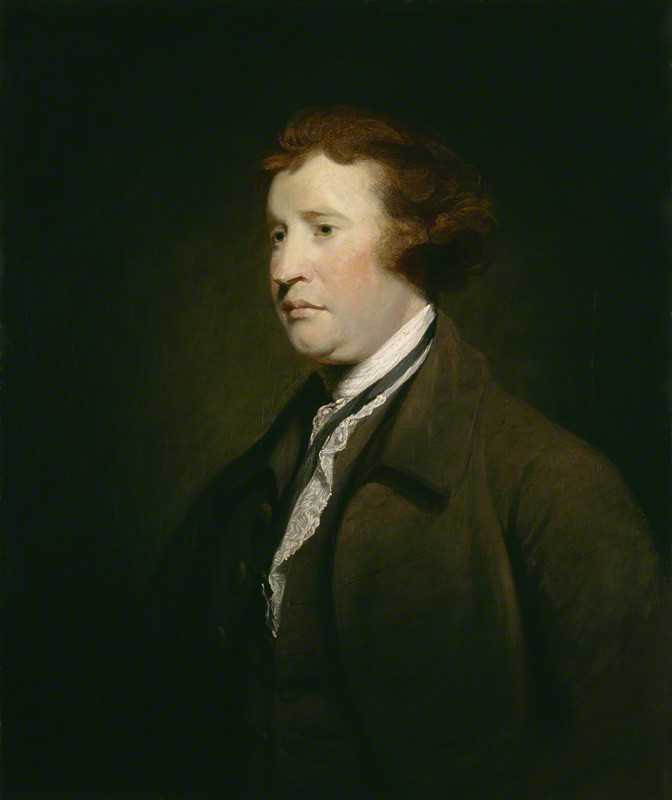
Greg Weiner has an essay posted over at The Imaginative Conservative exploring the link in the thought between the two great Whig statesmen:
Edmund Burke, Abraham Lincoln and the Problem of Greatness. Both Burke and Lincoln were men of conservative temperament who believed in reform through, as Weiner notes, the Whig concepts of gradual improvement and sound morality. "These are," as he puts it, "the essence of prudence." Lincoln and Burke are models of the reforming statesman, who look not to the disruption of ambition and distinction but rather to another path for excellence in reform: "prudence itself as a form of excellence worth celebrating too." As Russell Kirk was fond of pointing out, one of the key frames through which a conservative politician & statements views politics is the virtue of prudence, a virtue that enables the right deployment of the other virtues in both person and public life. And in politics, one of the key principles of prudential reform is continuity.
Nowhere is Lincoln's vision of continuity & reform more on display than in the
Gettysburg Address, delivered by the man who led the battle to save the Union in the face of those who would destroy the country in order to propagate the institution of chattel slavery:
Fourscore and seven years ago our fathers brought forth on this continent a new nation, conceived in liberty and dedicated to the proposition that all men are created equal. Now we are engaged in a great civil war, testing whether that nation or any nation so conceived and so dedicated can long endure. We are met on a great battlefield of that war. We have come to dedicate a portion of that field as a final resting-place for those who here gave their lives that that nation might live. It is altogether fitting and proper that we should do this. But in a larger sense, we cannot dedicate, we cannot consecrate, we cannot hallow this ground. The brave men, living and dead who struggled here have consecrated it far above our poor power to add or detract. The world will little note nor long remember what we say here, but it can never forget what they did here. It is for us the living rather to be dedicated here to the unfinished work which they who fought here have thus far so nobly advanced. It is rather for us to be here dedicated to the great task remaining before us--that from these honored dead we take increased devotion to that cause for which they gave the last full measure of devotion--that we here highly resolve that these dead shall not have died in vain, that this nation under God shall have a new birth of freedom, and that government of the people, by the people, for the people shall not perish from the earth.
Amen to that, Mr. President. Amen to that.